

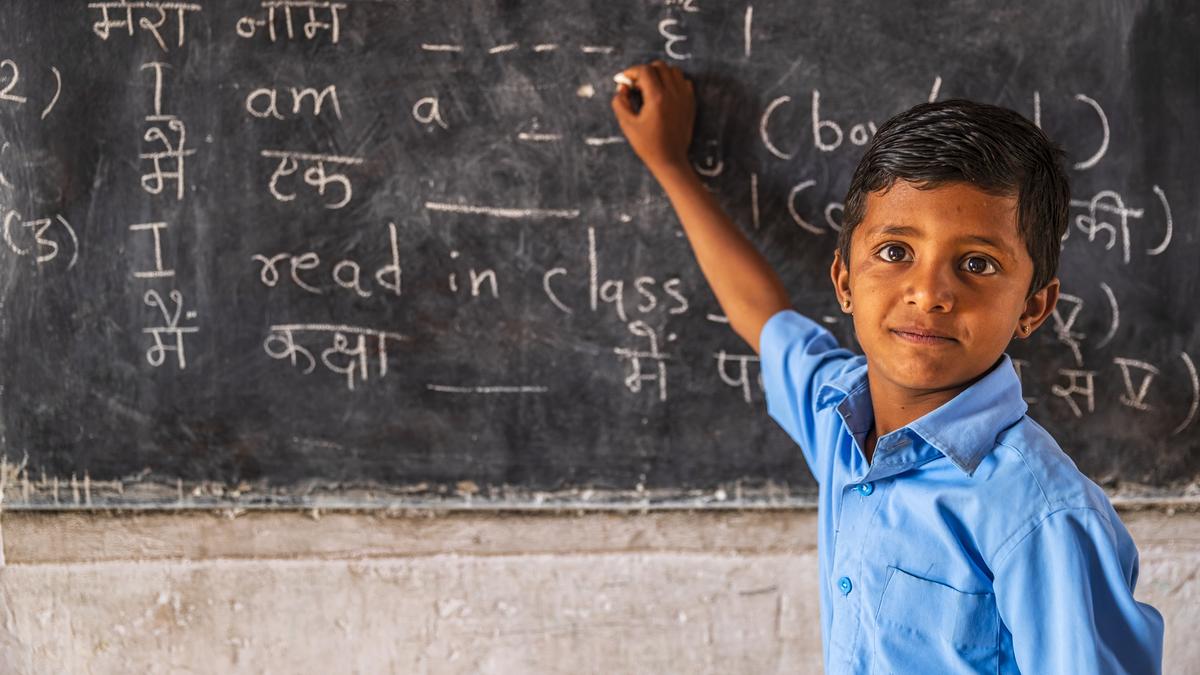
There is an increasing demand in linguistic States for creating livelihood possibilities for the local populace speaking in the State language.
| Photo Credit: hadynyah
Languages are seldom celebrated. Everyone uses it but forgets its role as a medium for passing on identities, traditions, beliefs, customs, and emotions. Stories are told through language, making humans unique among the species. It’s taken for granted that language is naturally and integrally imbibed in us, the way we breathe in and out without paying any heed. We do need to nurture a language with caring hands to ensure its healthy and prosperous growth.
On October 4, 2024, five more languages were added to the list of classical languages in the country. The official declaration added an extra dose of pride and a special identity to their speakers. The National Conference of 11 Indian Classical Languages, held in Amravati, Maharashtra, in October, where this writer represented Assamese language as one of the panellists, brought together the experts and language enthusiasts of all these languages. Experts discussed and deliberated on various issues pertaining to ways of celebrating language through inter-language cooperation, translation, and dissemination of ancient literary resources among multiple language users. This country owns a beautiful garden of languages written or spoken, recognised or unrecognised. A garden looks gorgeous when all its plants get an equitable share of care for healthy growth, and then they bloom together.
But, in practice, less-spoken languages are in peril of a slow death; you may call it linguicide or language shift. Many smaller languages are in need of intensive care, dangling between the status of extinction and a faint hope of revival. The northeastern region is a live example where smaller communities are witnessing rapid decimation of languages and dialects. The apprehension is strong that along with the death of these tongues, the storehouse of indigenous knowledge and traditional teachings will be lost for ever. Do we only mourn the loss, give a clarion call to preserve them in a protected cold storage or make effort for their survival?
Economics of language
A language flourishes only when it is in circulation among users. You will not like your children to learn, speak and write in it if it does not open up windows of economic opportunities. Economics of language, the first exposition of which came in the U.S. in 1965, does play a prime role in the survival and growth of a language. Not surprising that there is an increasing demand in linguistic States for creating livelihood possibilities for the local populace speaking in the State language.
Languages have been challenged by other issues too. At the conference, the speakers rightly presented the need for digitisation of their literary outputs for easy use and borderless accessibility. However, though the advent of the Internet was thought to be the birth of a democratic platform, a large number of well-developed, rich languages all over the world are running the risk of digital extinction. Barring four or five widely spoken, circulated and influential languages such as English, Chinese, and Russian which are dominating the Web, at least 22 European languages, including Slovenian and Lithuanian, are feared to be on the verge of getting decimated in the Internet space due to the dominating use of influential languages. Some countries have already devised ways and means to place popular apps and search engines in their own languages. Similar problems plaguing the growth of digital presence of multiple Indian languages need to be urgently addressed. With the promises of LLMs and AI, a well-devised action plan should take root for Indian languages too. The sooner, the better.
At the conference, the indigenously developed multilingual translation app Bhashini was put into action for real-time translation of the speeches in regional languages. Though the output was satisfactory, it needs more digital resources from individual languages and further validation to do the job better. Translation of classical literary marvels from one language to the other should be of utmost priority. This will come about through a broad-based partnership and coalition among the linguistic groups.
Death of the narrative
Language and literature are intimately connected, and they nurture each other. Thus, the important question relates to how we view them in the post-truth and new-normal era, when the unprecedented pace of technological innovation and its rapid spread are impacting multiple parameters in culture and community value systems. The misuse of language induces evil, as feared by Socrates. The words we use must break the trust deficit between authors and readers, guiding us toward truth and freedom of thought. Traditional metaphors and images are searching for new meanings and acceptability. The languages that are in substantive use are witnessing terms that preclude narratives on issues of social importance. The meagre use of single words such as “likes” on social media platforms, well-designed emojis, and abbreviated expressions such as LOL and OMG diminish the ideals of narratives. The widespread use of emojis has drastically affected narrative language. Narratives have been marked “RIP.” Creative authors are struggling to maintain exclusive rights in the age of regenerative AI models. The strike by Hollywood scriptwriters some time ago against the unpermitted covert scraping of their creations by AI avatars reflects the deep malaise in the promotion of creative literature.
While preparing a comprehensive report on epigraphic and other evidence for the Assamese language for submission to appropriate authority for classical status, this writer brought together young linguists, researchers, and veteran pundits from multiple fields. The enthusiasm of these youth revealed an important aspect. They must be given their due share in multidisciplinary linguistic research which will encourage new enthusiasm for language development. After all, future health and growth of any language is in their hands.
Dr. Kuladhar Saikia is a Sahitya Akademi award winner and retired Director-General of Police, Assam. As a former President of the Asam Sahitya Sabha, he played a prime role in getting the classical status for Assamese language. Views expressed are personal
Published – November 04, 2025 12:20 am IST

