

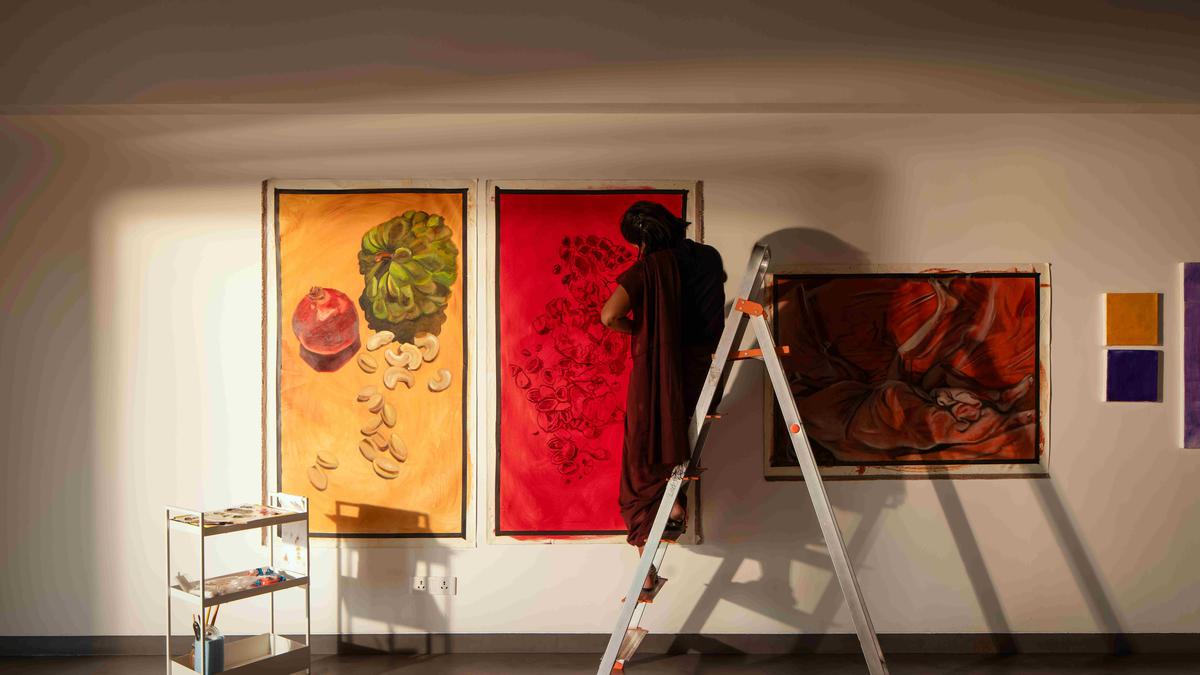
It’s an open studio day at the newly opened Hampi Art Labs. Draped in a dark green saree, Bhasha Chakrabarti is busy in her studio at the facility. Her yet-to-be-finished paintings on large canvases, hanging from the walls of the studio, feature bold and broad brush strokes. A visitor who engages with Ms. Chakrabarti gets curious about how she, who has a background in political science and economics, switched to arts.
Her response is quick, “Art has a lot of political possibility and I don’t think it was too much of a shift.”
Bhasha Chakrabarti at her studio in HAL
| Photo Credit:
Ravichandran N
Ms. Chakrabarti, who was born in Hawaii and is now based in New Haven in Connecticut, is one of the five artists from across the globe who have come for a residency programme at Hampi Arts Labs (HAL), located around 30 km from the UNESCO Heritage Site.
Not far from the sprawling steel manufacturing facility of the JSW Group in Vijayanagara, HAL, an initiative of JSW Foundation (the social development arm of the steel conglomerate), aims to provide unique production facilities and galleries for display for the resident artists.
Dream project
The Hampi Art Labs, which comprises exhibition spaces, studios and apartments for the artists, has been conceived by Ms. Sangita Jindal, the chairperson of the JSW foundation. Her daughter Tarini Jindal Handa is the creative director of the facility.
For Ms. Jindal, who says she fell in love with Hampi in the 1980s when she first visited the region, HAL has been a dream project.
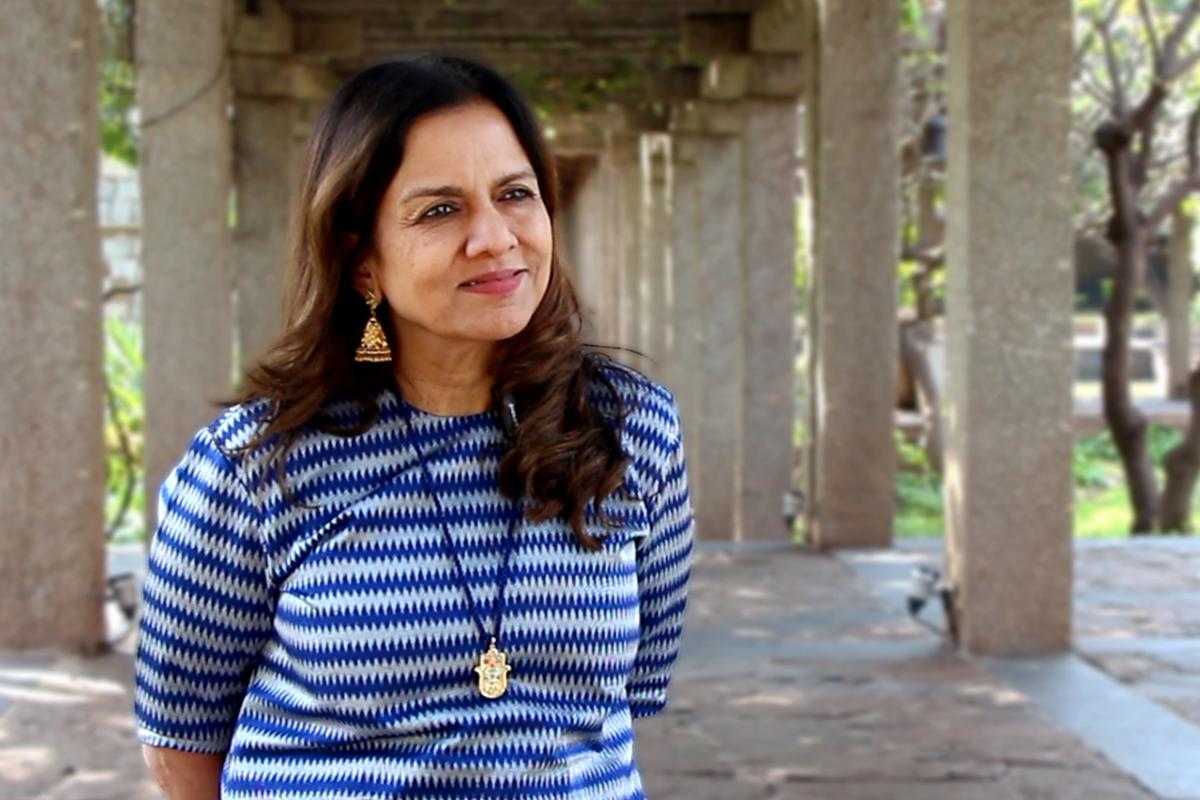
Sangita Jindal
| Photo Credit:
Ravichandran N
“I’m very interested in contemporary art. But because of Sajjan (Sajjan Jindal is the chairman and MD of the $23 billion JSW group and husband of Ms. Sangita Jindal), I got to know the heritage of the country. And then I stumbled upon Krishnadevaraya’s huge kingdom. It was a revelation for me and I tried to do what I could do for the region,” says Ms. Jindal.
Among other initiatives, the JSW foundation runs a handloom school and a waste recycling centre for women in the region.
The Kanoria Arts Centre established by her mother Urmila Kanoria has been one of the first artist residency programmes in India and a strong inspiration for her, says Ms. Jindal.
“After so many years, when all the other initiatives were established, I could pursue my dream to do the Hampi Art Labs. My mom used to do it, and I used to dream that I would do it here.”
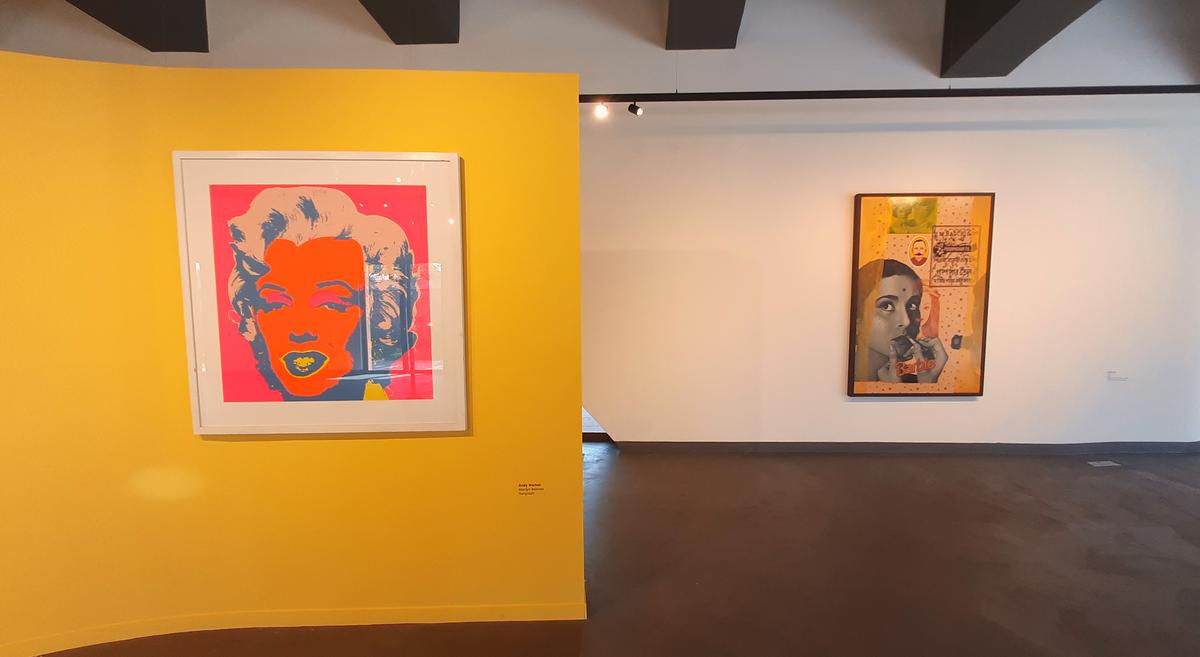
The Centre has been opened with an inaugural exhibition titled ‘Right Foot First’, featuring curated works from Ms. Jindal’s private collection.
| Photo Credit:
Ravichandran N
The Centre has been opened with an inaugural exhibition titled ‘Right Foot First’, featuring curated works from Ms Jindal’s private collection. The exhibition which showcases works of artists including Ai Wei Wei and Andy Warhol among others will be open for the public from February 6 to May 31, 2024.
A retreat for artists
The residency programme at HAL which runs for three months allows the artists to dabble with multiple techniques and materials, and interact with the local communities to incorporate those experiences into their works.
The facility currently has a ceramic studio as well as a printmaking studio, and is expected to have a sculpture studio in the future. The artists can access JSW facilities such as the steel plant, the handloom school and the embroidery school for creative resources. One of the notable features of the programme is that the artists are not bound by any deliverables.
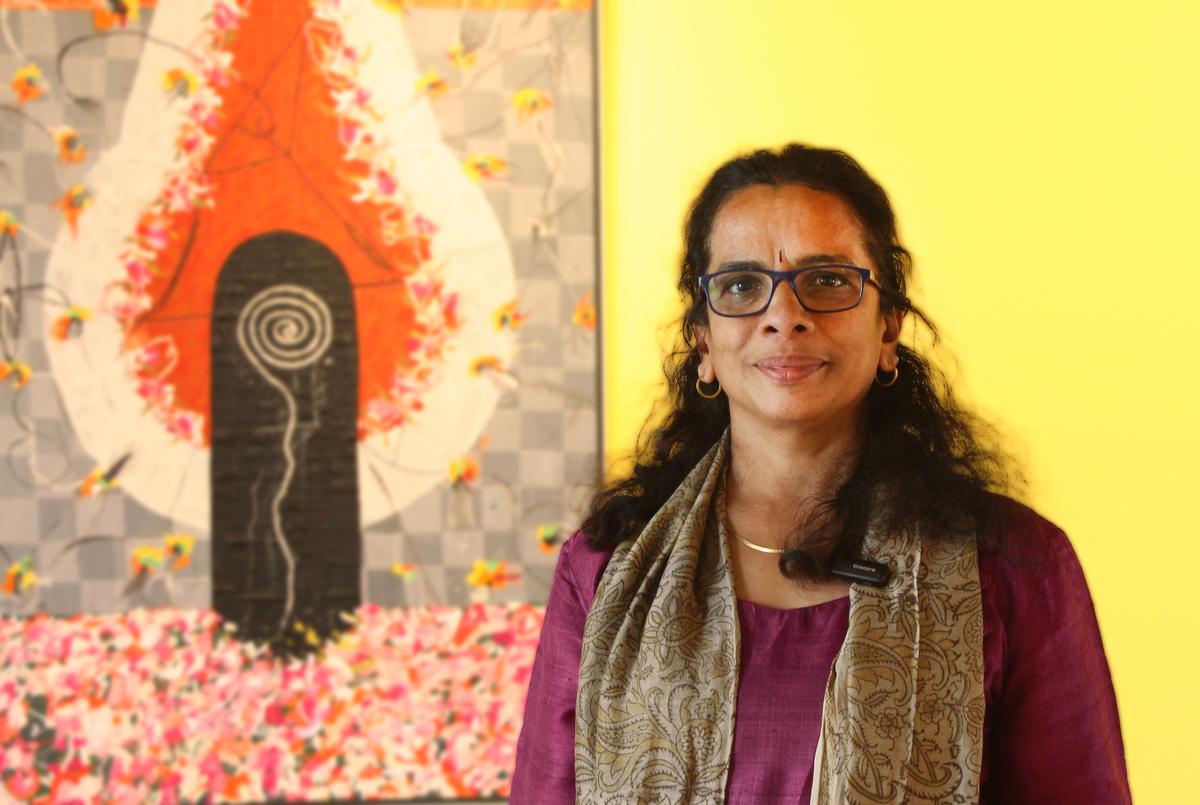
Meera Curam
| Photo Credit:
Ravichandran N
According to Meera Curam, the residency director, the art lab stems from the idea of a space where an artist could experiment, explore and expand their practice.
“Here at HAL one can explore and see what works for them. The artist doesn’t have any binding to give us any of their works, nor are we going to collect any from them,” says Ms. Curam.
“We do a lot of events where we visit heritage spaces, explore the terrain, work with local artisans…we organize a lot of these interventions where artists could meet different kinds of people. At the end of three months, we would have an open studio where we invite other artists and art historians to come and converse with the resident artists. It’s an opportunity for them to develop their network as well as creative practice,” she adds.
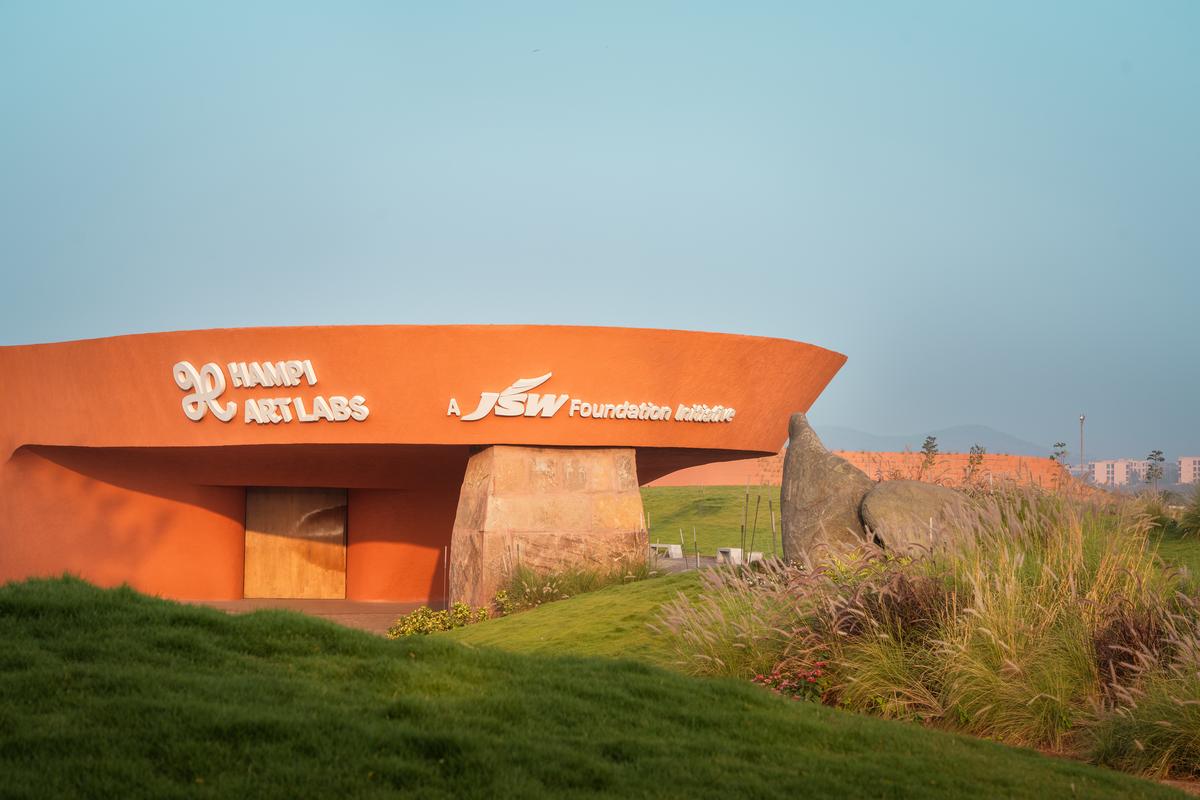
Hampi Art Labs
| Photo Credit:
Special arrangement
Promiti Hossain, a Bangladeshi artist who looks at gender struggles and socio-political aspects of her country, is currently a resident at the facility. She feels that the different studios at the facility are a big boon to the artists.
“We have these big studio spaces which allow us to work more freely. There are different studios in HAL including ceramics and printmaking, all together in one, which is very unique because I don’t think any other spaces in India, other than the academic institutions, have these kinds of facilities,” she says.
The current programme which began in January 2024 hosts five resident artists including Promiti Hossain, Bhasha Chakrabarti, Anirudh Shaktawat – a sculptor from Rajasthan, Madhavi Gore – a visual artist from Goa, and Sharbendu D. – a contemporary lens-based artist. The facility aims to have four such residencies per year.
Inspiring landscape
The centre which has been designed by Mumbai-based architect Sameep Padora and his studio SP+a takes inspiration from the surrounding natural landscape dominated by giant boulders, rugged hills, scrub forests and the river Tungabhadra.
“I think a place like Hampi is an artist’s dream. It’s got a sense of history, a sense of the residue left over from this grand creative endeavour, and there’s also so much mythology and storytelling that’s built into the landscape. There’s also this overall feeling of elemental creativity in the elements of the earth when you look at the landscape here,” says Ms. Chakrabarti.
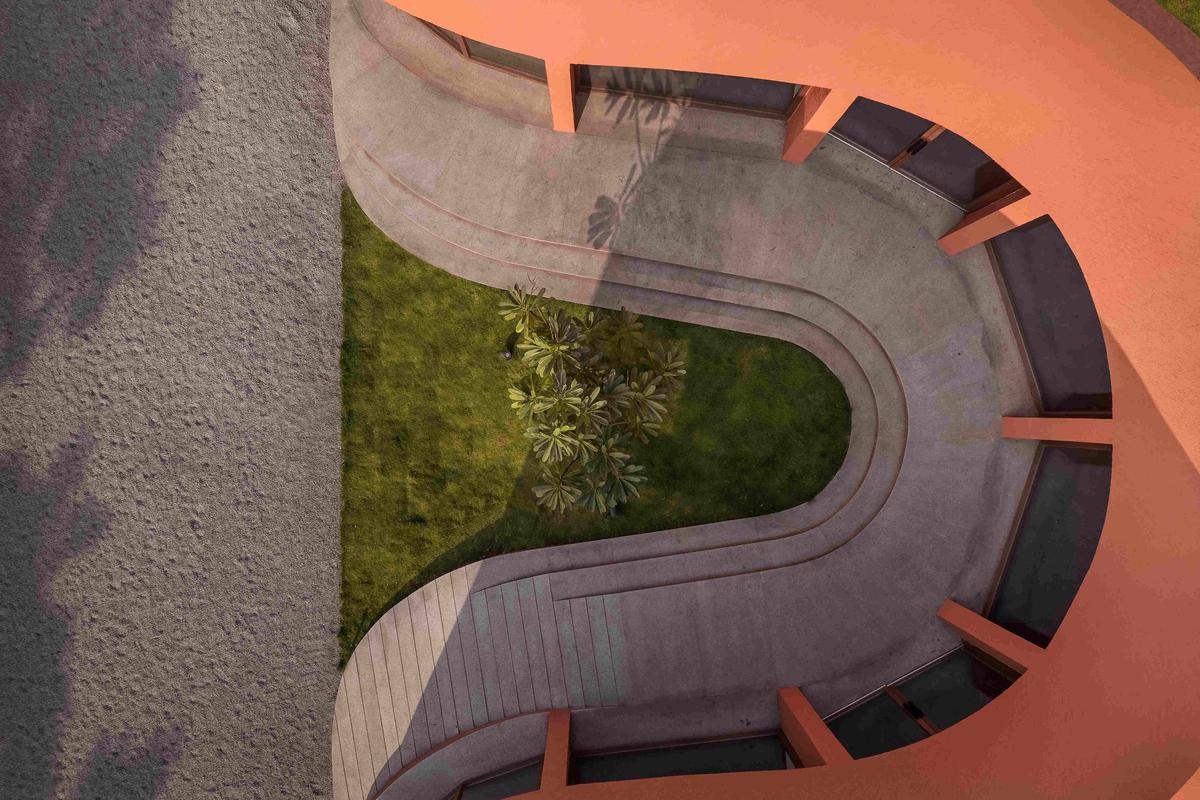
An aerial view of HAL
| Photo Credit:
Special arrangement
While she came to Hampi hoping to take inspiration from the stories of the Vijayanagara Empire and the heritage of the city, Ms. Chakrabarti notes that now she is being heavily influenced by the unique landscape.
“The mountains, the river, and the rock formations here are completely different from anywhere in the world. Learning how contemporary practitioners and people who live here work with the materials is inspiring. All of that is slowly flowing into the work,” says Ms. Chakrabarti.
Local participation
Regions like Anegundi, Koppal and Sandur which are not far from the facility are famous for crafts like weaving with fibres of banana and water hyacinth, and pottery,
However, the absence of artists from the region among the residents of the facility is striking.
The HAL team, nevertheless, vouches that the platform is open to all kinds of proposals from anywhere in the world and that the local has not been left out while conceiving the facility as a global platform.

Interior view of HAL
| Photo Credit:
Special arrangement
“The Art Labs wouldn’t just be about artists residing, practicing and going back. We also want them to give back to the community, may be by running workshops or other similar collaborations. It’s a two-way process and we are very conscious that we want to include the local artisanal community because we have a very rich heritage of weaving, dyeing, printing and embroidery in and around Karnataka,” says Ms. Curam.
“We will have two more calls for artists this year where we will also reach out to the local community, local art schools, and artists who are recent graduates, through our networks,” she adds.

While she came to Hampi hoping to take inspiration from the stories of the Vijayanagara Empire and the heritage of the city, Ms Chakrabarti notes that now she is being heavily influenced by the unique landscape.
| Photo Credit:
Ravichandran N
Disclaimer: The journalist visited Hampi Art Labs on invitation from JSW Foundation

