

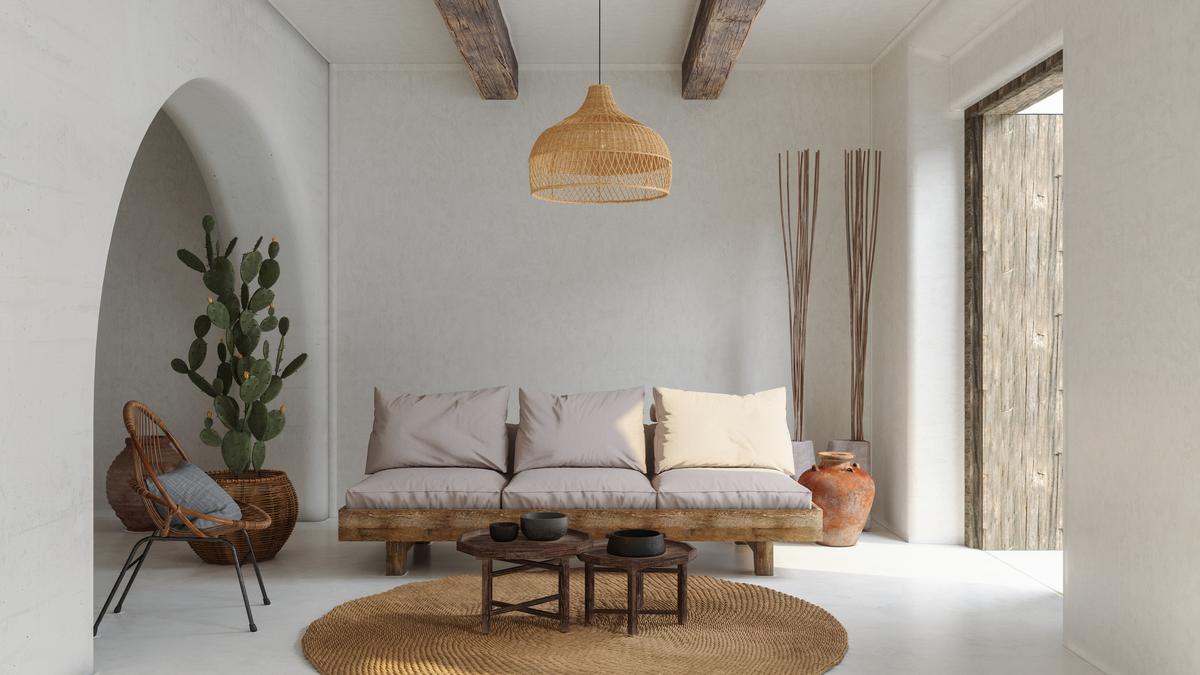
Get the rooms decluttered.
| Photo Credit: Getty Images
Recently, addressing a gathering dominated by children and young adults, writer and philanthropist Sudha Murty exhorted them to follow a simple life marked by minimalism.
In recent years, minimalism has become a new mantra, which has been often quoted in and out of place. Minimalism is a concept which is gaining much currency in developed nations as a way of life which would unburden the practitioner from unnecessary baggage in life and eventually lead to a more peaceful and contented life. It’s all about making intelligent choices about what is to be kept and what is to be eliminated. Decluttering is the cornerstone of minimalism and it involves getting rid of unwanted things. In many houses, bedrooms are the most cluttered place with every unwanted thing being abandoned. Such bedrooms, no doubt, distract the occupants and impair their sleeping habits. Go instead for minimalist bedrooms with minimalist wardrobes.
In many modern apartments and households, toys occupy a significant portion of living space. Declutter them either by eliminating the ones no longer used or gift them to orphanages.
This concept can be practised by anyone by modifying lifestyle, changing mindset and cutting down on unwanted possessions and comforts. It’s all about satisfying our needs rather than our greeds. It involves identifying the necessary in your life and avoiding the rest which means that we buy items which are absolutely necessary. Before buying anything we should ask ourselves whether the particular item is absolutely necessary and if the answer is ‘yes’, we can go ahead with the particular purchase.
Otherwise we can postpone it to some time in future. Minimalism enables many perceptible advantages to its followers such as more economical use of money and other resources, decluttering of living space, a significant reduction in waste generation, decreased use of water and energy, a more environmentally way of life and above all, the satisfaction of leading a life which is more eco-friendly. Fewer possessions leads to fewer distractions and more happiness in your home. Use minimum amount of furniture and wherever possible use convertible types or multipurpose ones.
Another area which is cluttered in most houses is the kitchen which is used as a convenient space to dump everything. A cluttered kitchen dispersed with unwanted things is a common sight in most Indian houses. Buy only the essential food items and that too locally available fruits and vegetables because food articles sourced from far away locations generate large amount of carbon dioxide during transportation. Focus on essentials. As far as possible, modify food habits by including plentiful fruits and vegetables as they can be eaten raw or with minimum cooking which reduces the emission of green house gases. The aim should be to optimise resources and make a nutrient dense food which has minimum impact on the environment.
Academics, researchers and voracious readers can replace printed books with digital versions. Apart from saving space, it obviates the need for occasional disposal of yellowish, moth-eaten and dust-covered old books and periodicals. This also reduces the pressures on forest wealth with decreased use of papers. Try to purchase products which are durable, reusable and have a prolonged life. Minimise dependence on single-use items such as paper glasses and plates, tissue and cutlery. During long travel, it’s a sensible idea to carry a set of plate, glass, spoon and cutlery of our own and to reduce reliance on disposable items which has huge pollution potential. Encourage students and youngsters to write using a fountain pen or a ballpoint pen that can be refilled and used for many years instead of use-and-throw type inexpensive pen.
In olden days we used to visit grocery stores with a list of essentials to be purchased. In modern days we visit shopping malls and supermarkets and indulge in purchases, most of them being non-essential articles. To attract such naive customers, the supermarkets often arrange branded items in a very attractive and appealing manner with mind-boggling colour lights, very often with discounts and credit facilities, a system referred to as “visual merchandising “ in managerial parlance. The lure is so irresistible that many fall into the trap and end with purchases of unwanted items. Consumerism has so entrenched in our lives that a visit to the nearby malls have become a part of our weekend agenda.
A minimalist living involves de cluttering, organising and minimising intentionally so that life becomes simpler and more pleasurable. Cut on spending, refrain from being a spend thrift. From a holistic point of view, divest yourself of unwanted objects, practices, thoughts and memories and you will be able to experience the benefits of minimalism. Practise minimalism as a way of life and is definitely going to pay its dividends.
tnvgopal@gmail.com

