

Maoism in India has been significantly curbed. The dip in Maoist-related violence, especially over the last two years, has restricted the insurgency to few pockets in the Bastar division of Chhattisgarh. Government data show that violent incidents have reduced by almost 90% from 2010 to 2025. The number of Left Wing Extremism (LWE)-affected districts fell from 126 to 90 in April 2018, 70 in July 2021, 38 in April 2024, 18 in April 2025 and only 11 in October 2025. Only three districts — Bijapur, Narayanpur and Sukma, in south Bastar — are categorised as most affected.
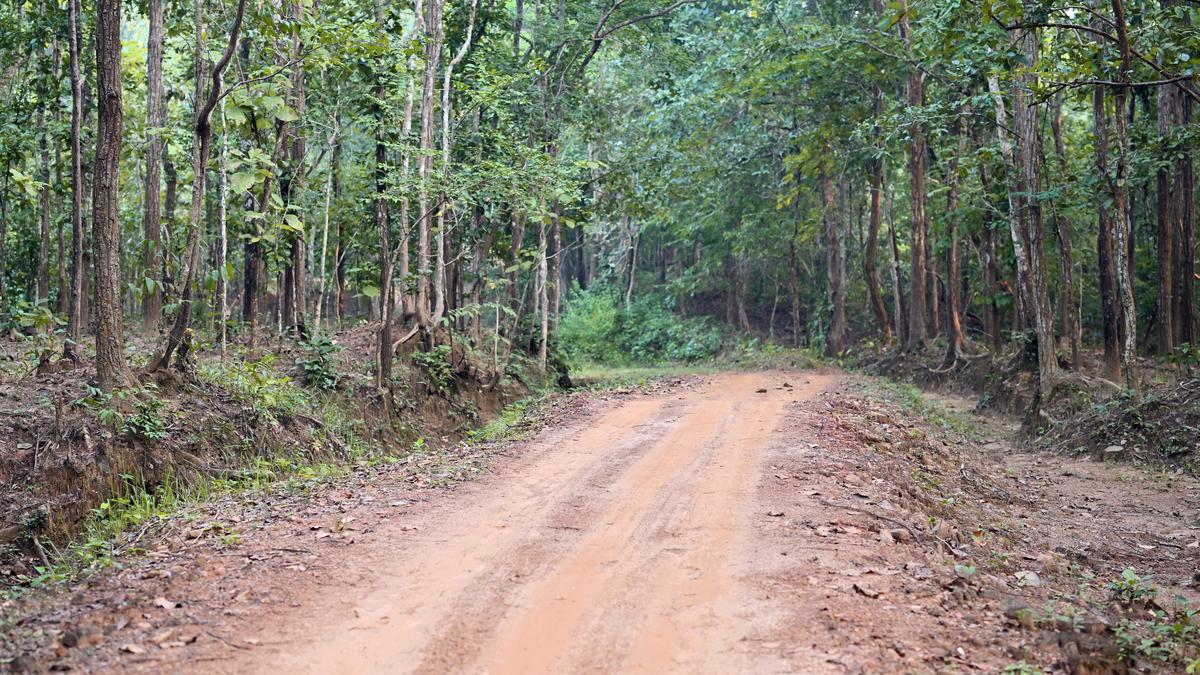
Maoists entered the Dandakaranya region (DKR) in the early 1980s due to mounting pressure in Andhra Pradesh. Thickly wooded and tough terrain, and abutting parts of several States such as Andhra Pradesh, Chhattisgarh, Maharashtra, Odisha and Telangana made DKR the most appropriate ‘rear area’ for the Maoists, with the Bastar division as the hub.
EDITORIAL | For a new path: on the surrender of key Maoist leaders
A gradual change
The DKR of the early 1980s was characterised by several peculiarities that favoured the Maoists. Its geographical remoteness, rugged terrain, marginalised tribal inhabitants and the official policy of maintaining tribal belts as exclusive areas were the major factors that characterised the administrative neglect of the region. The governance deficit was the most crucial factor that enabled the Maoists to expand and establish their parallel government.
In addition, the state’s focus on the extraction economy and the tribal struggle for ‘jal-jungle-zameen’, provided the overall context to the conflict. The setback to Maoism has been a function of the inroads made by civil administration into remote areas under Maoist control. The game-changing initiative of the government has been the establishment of security camps in the remote areas, regions of erstwhile Maoist domination. Initial attempts to establish camps did face local resistance. However, local resistance subsided following the benefits that accrued to the local population. The advantages of the new camps have been multifaceted.
Also Read | 2,167 Maoists surrendered this year, says Centre
Path to progress
First, the camps enhanced the security footprint in remote areas. A boost in police to population ratio deterred the Maoists from operating with impunity.
Second, the reaction time for the security forces in response to emergencies was considerably reduced, putting the Maoists on the defensive. The security forces now operate with more confidence and higher motivation levels.
Third, the local population witnessed the security forces gaining an upper hand, which was also a psychological setback to the Maoists. The local population is more assured now that the wherewithal for their welfare and development is with the government and not with the Maoists.
Fourth, the cascading effect of the advantages gained by security forces improved the human intelligence (HUMINT) scenario for the forces in a zero sum manner.
Fifth, the camps have also seen the construction of roads, and erection of mobile towers, thereby transforming the local lifestyle.
Sixth, the civil administration has piggy-backed on the support provided by the security camps. The local population that till now had only seen a policeman or a forest guard as representative of the government is now seeing the collector, tehsildar and patwari reaching out to them. As progress is further consolidated along the axes provided by security camps, the future is both encouraging and promising. As a corollary, the appeal of Maoists has waned. The scope of capability development in terms of recruitment, weapons and ammunition acquisition and funding for the Maoists has diminished. Large numbers of cadres along with their leaders have either surrendered or have been neutralised by the security forces. It indeed is a matter of time when the physical presence of Maoism will cease to exist.
Also Read | The future of governance in post-Maoist India
Implement constitutional guarantees
However, the challenge in the mid- and long term can only be overcome if the structural issues are addressed. Now that the local population is expected to come out of seclusion, rights-based issues will come to the fore. Several Maoists leaders who have surrendered in recent days, declaring their intent of carrying on with the struggle for the tribal cause in a democratic manner. The task at hand for the government hereafter becomes difficult, warranting transparent and mature handling.
Implementation of constitutional guarantees enshrined in Acts such as the Panchayats Extension to Scheduled Areas Act and Forest Rights Act should form the basis of the approach ahead. Civil administration, in most of the areas that had minimal governance, has to start from scratch.
A task force with a prospective plan for the region, till 2047, as part of the Viksit Bharat vision, will not be too ambitious to ask for. The security forces have toiled, made sacrifices and managed the conflict well, giving a platform to the government to carry forward the mission for sustainable peace.
Shashank Ranjan is an Indian Army veteran (colonel) with substantial experience of serving in a counter-terrorism environment. He currently teaches at the O.P. Jindal Global University, Sonepat, Haryana
Published – January 05, 2026 12:48 am IST

