

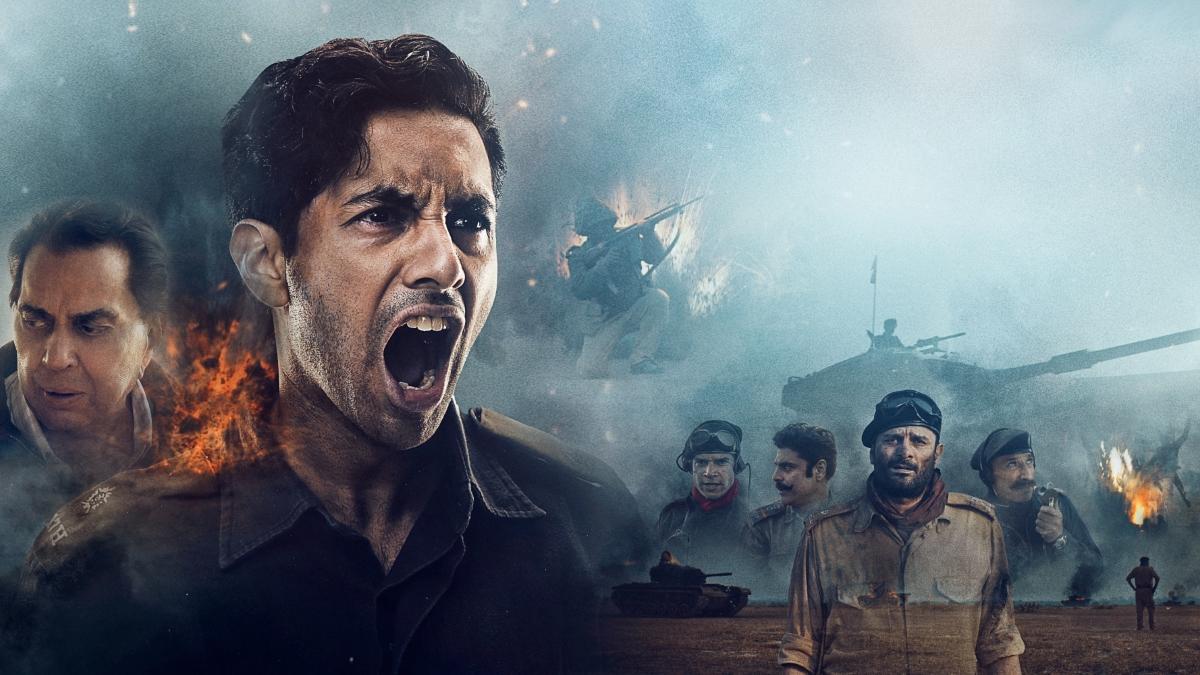
These are interesting times in popular Hindi cinema, as a battle of perspectives rages at the turnstiles. Filmmakers known for overtly jingoistic tentpoles are turning to dark espionage dramas to convey their political intent, while those celebrated for their noirish, intricate thrillers are turning to patriotic dramas with predictable plotlines, in what seems like a well-argued counterpoint.
After Farhan Akhtar took a break from his Don franchise to become the last man standing in the battle of Rezang La in 120 Bahadur, this week, Sriram Raghavan turns to the Battle of Basantar to honour a real-life martyr and take a shot at peace at a time when the world seems to be warming up to war.
An intimate exploration of duty, loss, and the human side of conflict, the film’s plea for empathy across borders is noble, emphasising the futility of war and the personal toll it exacts. It’s not revolutionary, but its emotional sincerity and stellar acting elevate the experience.
Ikkis (Hindi)
Director: Sriram Raghavan
Duration: 147 minutes
Cast: Agastya Nanda, Dharmendra, Jaideep Ahlawat, Simar Bhatia, Sikandar Kher, Vivaan Shah
Synopsis: The dramatised story of Second Lieutenant Arun Khetarpal, India’s youngest Param Vir Chakra recipient, who at age 21 displayed extraordinary bravery in the 1971 war, sacrificing his life while destroying enemy tanks.
Chronicling the short but heroic life of Second Lieutenant Arun Khetarpal, who earned the Param Vir Chakra for his valour in the 1971 India-Pakistan war, the film spans two timelines. On the one hand, it follows Arun (Agastya Nanda) on the battlefield. On the other, it tracks his father, M.L. Khetarpal (Dharmendra), on a trip to Pakistan, when the two neighbours took a diplomatic detour with ‘Aman Ki Asha’ after the Kargil conflict.
Raghavan doesn’t rely on green screens to create the bloodstained enormity of war. As Centurion tanks make their way into Pakistan through a mine-filled Basantar river, his direction marks a refreshing departure from rhetorical patriotism seen in many war films. He opts for restraint, focusing on emotional and operational authenticity over spectacle. As a quote on the bulletin board of a school that is turned into a barrack in the film exhorts, Raghavan does what is right, and not what is easy.
Anil Mehta’s camera doesn’t just follow the monstrous, marauding tanks; it also pauses to look back at the bodies they leave behind in their wake— sons and brothers soaked in blood and covered with flies.

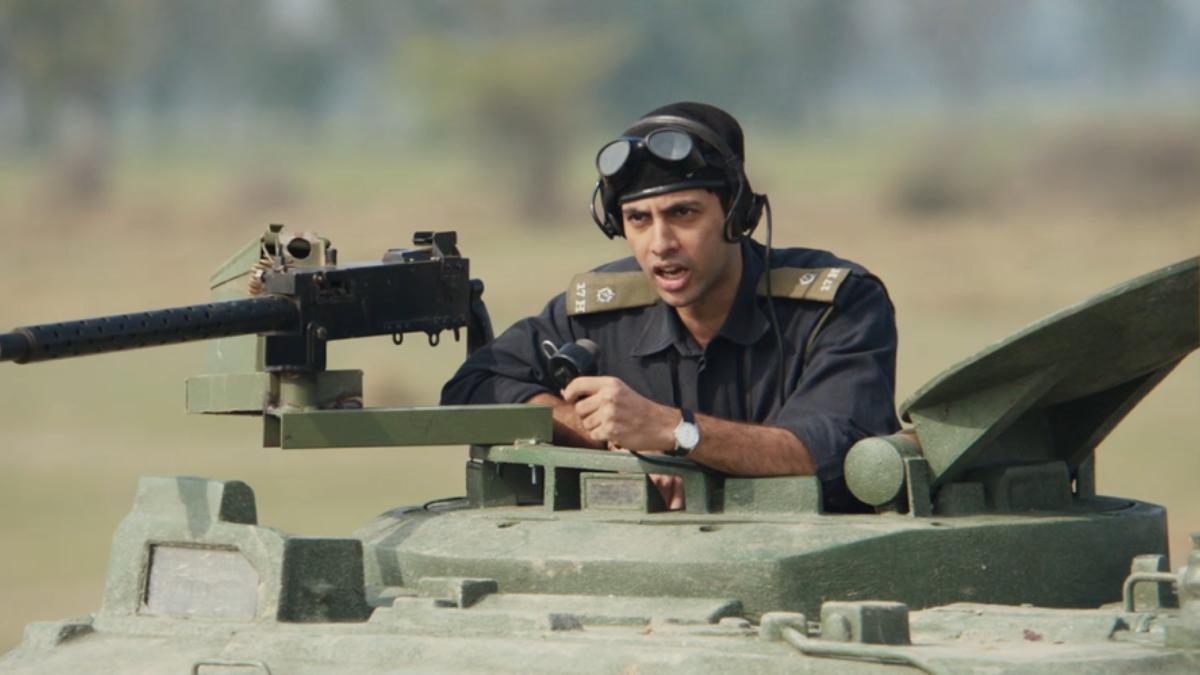
Agastya Nanda in ‘Ikkis’
| Photo Credit:
Maddock Films/YouTube
The senior Khetarpal, who also served in the armed forces, is warmly welcomed by a Pakistani Brigadier Khwaja Mohd. Naseer (Jaideep Ahlawat). The brigadier holds a secret; his family feels a bit hesitant that the old man might not be able to take it, but Naseer wants to relieve himself of the burden he has been carrying for 30 years. As they take the road to Sargodha, the old wounds get fresh, and our eyes brim with emotion.
Alongside Raghavan, co-writers Pooja Ladha Surti and Arijit Biswas, tell us how a young boy transforms into a soldier. The romance (debutante Simar Bhatia stutters before finding her groove) around Ernest Hemingway’s When the Bell Tolls is not as passionate as it aspires to be, but once it settles down, Ikkis creates a believable world within the cantonment, and the figures of speech begin to take hold.

Through the history, the poetry, the raging hormones and the urge to hit the battlefield, Raghavan traces the rise of the hero without putting a halo around his head. Like most of his protagonists, Arun is not a hero sans flaws. The film delineates the thin line between duty and loyalty for a young soldier. In colloquial Hindi, 21 is a metaphor for something better than the competition. Raghavan cleverly plays on his protagonist’s age to create his mindscape, in which he seeks to leave an impression on posterity at all costs. Hailing from the Poona Horse Regiment, when his tank gallops, none can stop it.
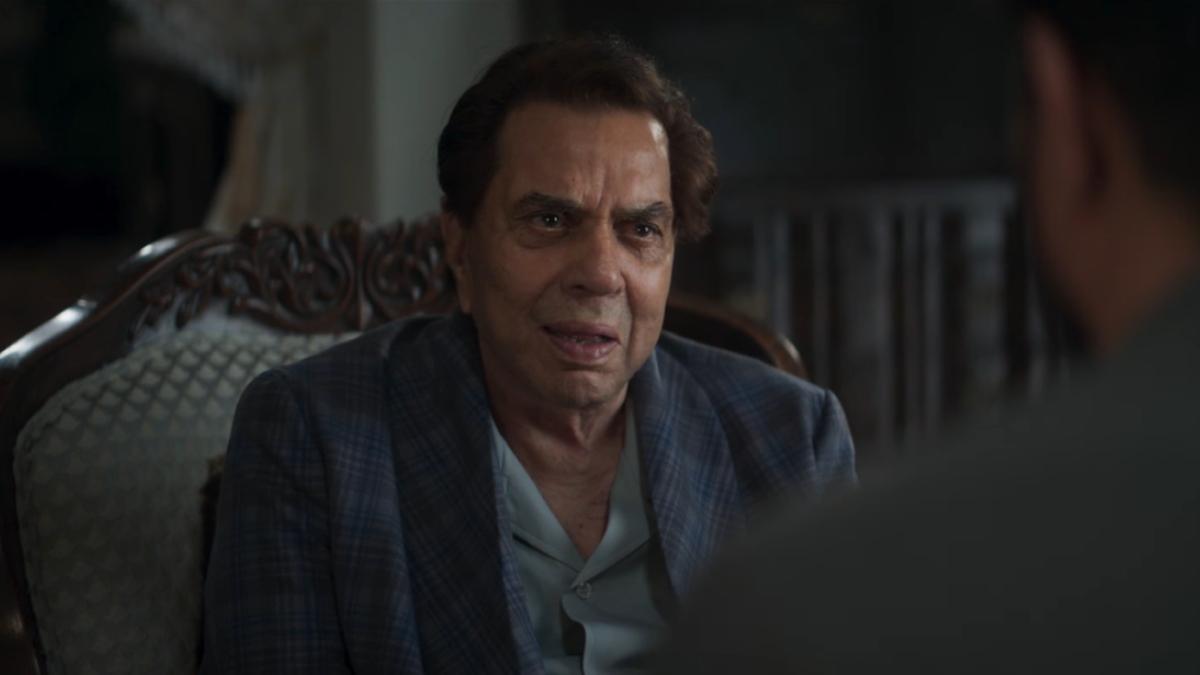
Dharmendra in the film
| Photo Credit:
Maddock Films/YouTube
In a breakout role, Agastya conveys the resolve, innocence, and restlessness of a young soldier through his deep, vulnerable eyes. Sometimes, in a single frame. The boy’s anguish is very Bachchanesque and demands attention. In the support cast, Sikandar Kher and Vivaan Shah add heft to the narrative.
However, it is old warhorse Dharmendra who holds the film together, playing the grieving father with remarkable restraint and grace. Relying on silence, subtle glances, and understated expressions, he doesn’t let the gravity of a soldier’s father crumble under his personal grief, yet leaves us teary-eyed with a message on the futility of war and the urge to scratch the wounds when they are about to heal. In his swan song, the versatile actor once again underscores how he was underutilised in his later years.

With a poignant jugalbandi between grief and guilt, duty and humanity, Jaideep and Dharmendra, literally and metaphorically, hold each other’s hands in turn, taking us out of a rage-baiting atmosphere.
However, the peace between the neighbours is so brittle that the makers slip in a disclaimer in the end credits to remind the audience exiting the theatre that Naseer is an exception in a country that is relentlessly hostile to India. Meanwhile, Anurag Singh’s Border 2 is waiting in the wings to fire another salvo of perspective.
Ikkis is currently running in theatres
Published – January 01, 2026 04:02 pm IST

