

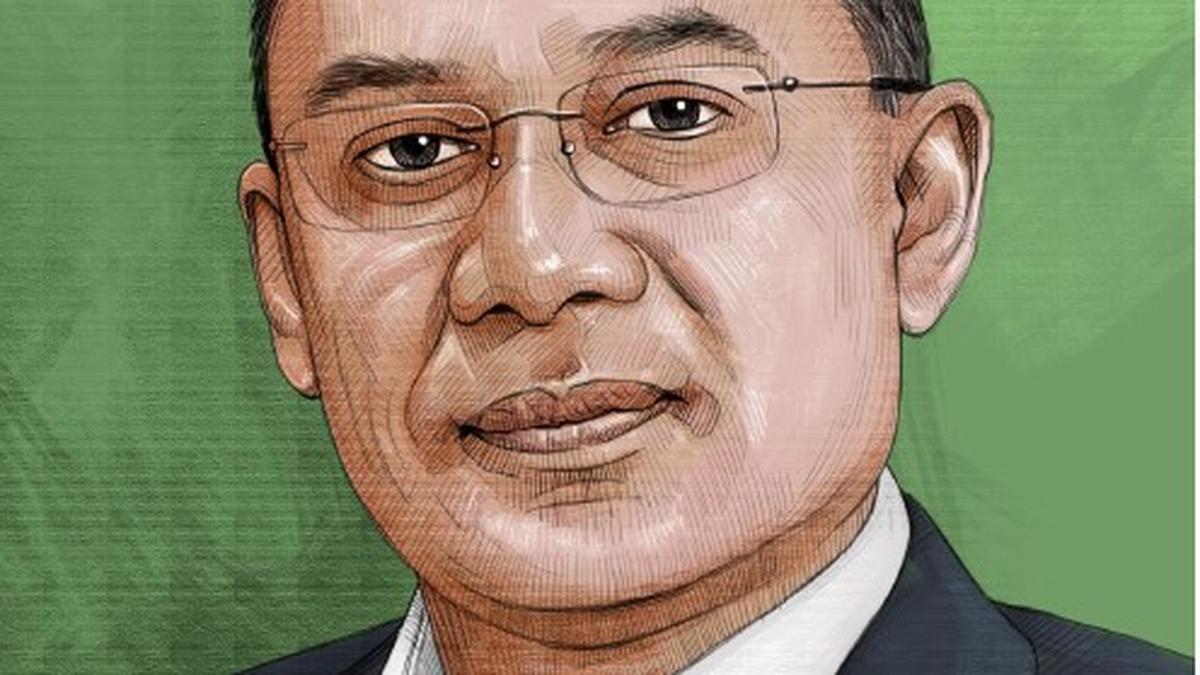
Stepping out of the wood-panelled VVIP arrival lounge of the Hazrat Shahjalal International Airport on December 25, Tarique Rahman, the acting chairman of the Bangladesh Nationalist Party (BNP), walked to a small grassy patch beside the car park, took off his shoes, and stepped onto the ground. It was a gesture signalling that he had reconnected with the land of his birth and finally secured the political launch that was denied to him when Bangladesh spiralled into political uncertainty in late 2006, preventing him from contesting his first parliamentary election. In his speech after returning from London, Mr. Rahman struck an inclusive tone, calling for inter-communal and inter-ethnic harmony in Bangladesh, and, with an eye on his political enemies, set about dismantling some of the allegations levelled against the BNP by its opponents.
From 2009 to 2024, Sheikh Hasina had repeatedly described the BNP and Mr. Rahman’s mother, Khaleda Zia, as pro-Pakistan. In his speech at the July 36 Expressway, Mr. Rahman invoked the BNP’s links to the 1971 Liberation War and the political developments of November 7, 1971 that brought his father, the late Gen. Ziaur Rahman, to de facto power. In doing so, Mr. Rahman signalled that, much like Ms. Hasina’s reliance on the legacy of her father, he too would build his political narrative around the legend of his father. Gen. Ziaur Rahman began his career as a soldier in the Pakistan Army and fought against India in the 1965 war, and later defected from the Pakistani military to declare the independence of East Pakistan hours after the Pakistan military launched Operation Searchlight on March 25, 1971.
Through his speech and subsequent messages, Mr. Rahman has signalled that this time, he had come ready with an alternative vision for Bangladesh — one in which the previous regime’s iconography would be challenged by the icons of the BNP.
The massive crowds that greeted him on December 25 and 26 might have given him a grand welcome, but Mr. Rahman was quickly reminded of the perils of Bangladeshi politics. Jamaat-e-Islami chief Shafiqur Rahman said his party, the country’s largest Islamist party, would “keep an eye” on Mr. Rahman. The remark was particularly significant because by emphasising inclusion, Mr. Rahman had conveyed that this time, unlike his last stint that ended in 2007, he intended to pursue a different trajectory.
Political trajectory
The political journey of Mr. Rahman was shaped by the traumatic memories of his childhood. On May 29, 1981, when he was in his teens, his father left for the port city of Chittagong for an unscheduled visit. A day later, he was shot and killed in an attempted coup that lasted only three days. After the assassination of Gen. Zia, the BNP was energetically led by Khaleda Zia, who often wore white and joined hands with her arch enemy, Sheikh Hasina, to challenge the military dictator, Hossein Mohammed Ershad. Ms. Zia went on to become Bangladesh’s first woman Prime Minister in 1991. Mr. Rahman started his formal political journey on June 22, 2002 when the BNP appointed him its 1st joint secretary.
During this period, Mr. Rahman earned a name for himself that found mention in U.S. Embassy cables from Dhaka, later released by WikiLeaks in 2005. Ms. Zia’s return to power coincided with the U.S. war on terror, centred on the Af-Pak region but with far-reaching consequences for South Asia. Amid several legacy security issues, the BNP was accused of hosting the leadership of the United Liberation Front of Asom (ULFA) in Dhaka, which gave Bangladesh-India relations under Khaleda Zia a strained reputation.
More serious, however, were allegations of links between some senior BNP figures and the extremist Jamaatul Mujahidin Bangladesh (JMB), led by Bangla Bhai. While the JMB was designated a terrorist organisation internationally, Ms. Zia refused to acknowledge the links between party leaders and the terror group. One U.S. Embassy cable referred to Mr. Rahman’s “steely nerves” for which he was being recognised inside the party and dubbed him “The Dark Prince”. “Tarique Rahman has the Zia name, political cunning,” one cable noted, describing him as a “uniquely polarizing figure in Bangladeshi politics” and “ruthless”. The U.S. Embassy predicted that Mr. Rahman was getting ready to contest the 2007 election, but cautioned that he would not command broad support within the party if Ms. Zia pressed too hard for her son to emerge as the next Prime Minister.
Mr. Rahman’s career plans were disrupted on January 11, 2007 when the army-backed interim government of President Iajuddin Ahmed declared emergency in Bangladesh. The emergency launched a major anti-corruption drive that targeted both Sheikh Hasina and Khaleda Zia. It was, however, the treatment of Mr. Rahman by the officials that generated sympathy for him.
In 2009, during a meeting with a foreign diplomat in his London flat, Mr. Rahman said he had been tortured in custody, leaving him with a spinal injury that required prolonged medical treatment. Thereafter, he remained largely confined to London, looking after the BNP’s activities in the U.K., addressing supporters via video link and engaging with foreign diplomats and visiting politicians from his home. As Ms. Zia’s health declined, Mr. Rahman’s position within the party became increasingly clear, a status further consolidated by his backing of the BNP’s boycott of the 2014, 2018, and 2024 elections. The party insisted that polls be held under a caretaker government, accusing the Hasina regime of bias.
Key player
The welcome given to him has ensured that Mr. Rahman will be a major player, and possibly the prime ministerial candidate, in the next election. That prominence has also heightened his internal vulnerabilities and drawn greater attention from abroad. Ahead of his arrival, parties such as Jamaat-e-Islami and the National Citizen Party had held rallies across the country. Yet, the scale of the crowds Mr. Rahman drew for his meetings at the July 36 Expressway, the Shaheed Minar and at the Sharif Osman Hadi memorial at the Dhaka University, has made those previous rallies pale in comparison.
His arrival has already shaken the established political equations in Bangladesh. The NCP’s Arshadul Haque resigned soon after Rahman’s arrival, citing his discomfort with its seat-sharing talks with Jamaat, and went on to endorse Mr. Rahman for his inclusive approach.
At the same time, friction has rocked the eight-party Islamist coalition over seat-sharing arrangements. Reports from Dhaka suggest that attacks by Islamist mobs — from the burning of newspaper offices to assaults on prominent cultural institutions such as Chhayanaut — have triggered a drift of leaders and voters towards the BNP.
However, it remains to be seen if Mr. Rahman can hold on to the momentum and turn it into a decisive victory.
Published – December 28, 2025 01:25 am IST

