

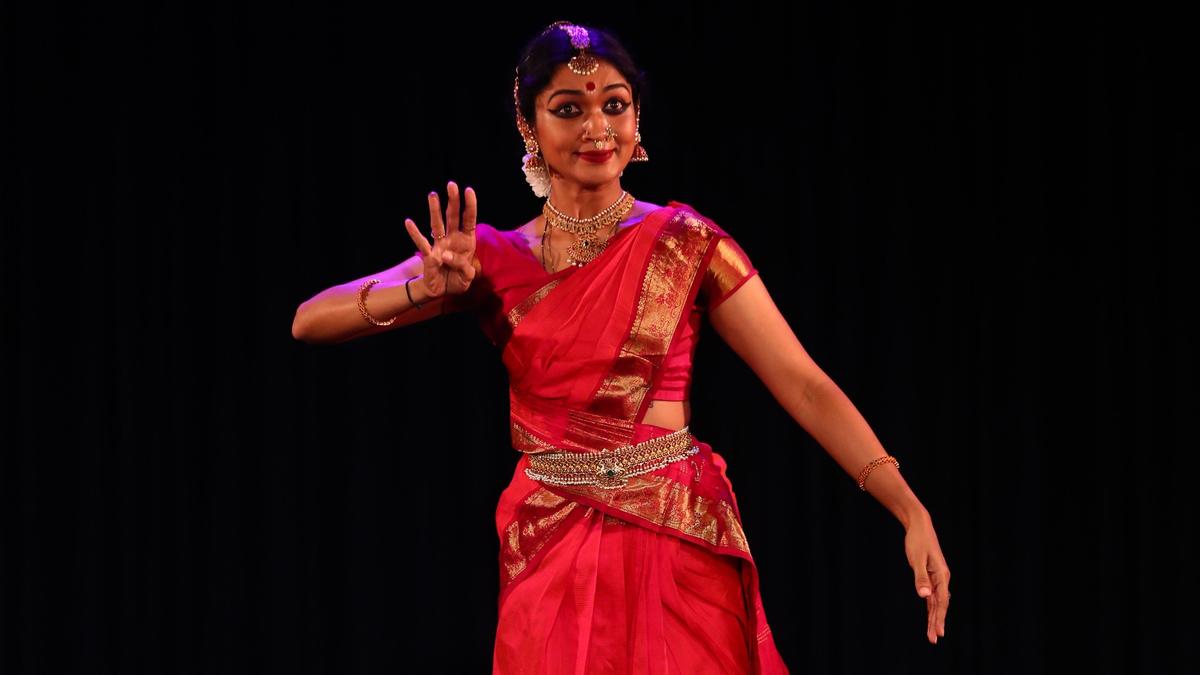
‘Murugiyal – Tri Yatri’ was a performance-oriented dance seminar , with ample mini-performances. Day 2 was all about spiritual, religious, historical compositions and the gypsy- story, the Kuravanji, etc. They represented Tamil compositions down the ages.
Three dancers handled the first session — Tattuva Vazhi Payanam (Philosophical Journey). Sathvikaa Shankar’s ‘Tirumandiram’ verses (researched by Prof. Raghuraman, tuned by Vanathi), picked from the introduction and the tantras, were presented as a quiet devotional offering, along with a well-timed nritta set. Kaushik Champakesan (vocal), Srilakshmi (violin), and Ramshankar Babu (mridangam) require a special mention as Sathvikaa’s accompanists.
Aswini Vishwanath presented Prabhandams — from Shaiva and Vaishnava devotional literature in Tamil, by Karaikkal Ammaiyar (Arputha Thiruvanthaathi, Tiruvalangadu patikams) and Aandaal (Nachiyar Thirumozhi). She weaved little storylines with a few verses — Ammaiyar’s devotion to Shiva in ‘Kaadalai’ in a poetic combination of tanam and recitation.
The haunting Khamas — ‘Karpooram narumo’ — set the stage for Andaal’s story. Aswini has a rather clear and matter-of-fact style, which, when combined with the layered music (vocals by Kaushik, who also composed the music) and nattuvangam (by Narendra Kumar), added creative imagery.
The orchestra got leaner with a one-man-standing orchestra — Kaushik, for Lucrezia Maniscotti’s work on the ‘Thiruvarutpa’. While her cultural adaptation was complete, there was a perceptible sense of restraint in her — for starters, Lucrezia had no salangai around her ankles or accessories on her, save the rudraksha mala.
Lucrezia also had some theatrics up her sleeve. She started with the last lines of the song ‘Kallaarkkum katravarkkum’. Expanding on the idea of joy and divinity, the tanam led into a journey across the seas to see Shiva. She reaches the temple at last, bargains for flowers outside and is awed by the temple gopuram. She runs inside with anticipation to see Ganesha and pays her respects to Shiva, as she expounds Ramalinga Swamigal’s message of universal love, equality. Swarams were executed without the salangai or percussion, a new for us. And as the dancer walked back, she draped herself in a white cloth; in that instant she turned into ‘Vallalar’, the author and famed bhakta — theatrics at its subtlest.
Lakshmi Ramaswamy, dancer- researcher in Tamil Lliterature, chose two minor genres to delineate — Thoothu literature, dealing with messengers, people or objects, and Pallu literature, dealing with farmers
Lakshmi Ramaswamy, dancer- researcher in Tamil literature, was given two minor genres to delineate — Thoothu literature dealing with messengers, people or objects, and Pallu literature dealing with farmers in the ‘Inivu Thedi Payanam’ — Journey for Ultimate Union-segment. Supported by an excellent orchestra — Ananthraman (violin), Preethi Sethuraman (vocal), Veda Krishnaram (mridangam) — she presented two pieces in 15 minutes.
The first, ‘Silambu Vidu Thoodhu’ on Nataraja was written by Prof. Raghuraman, was presented. The PaLLu piece was from the 17th century ‘Mukkoodar PaLLu’ which was an entertaining segment between two wives of a farmer, banter over their Ishta devatas, Vishnu and Shiva. The segment, though short, was illuminating.
The evening progressed with Alex Rapheal’s offerings— Thiruvisaipa verse ‘Annamai’ and the Kamakshi viruttam in a beautiful Bhoopalam, Khanda Chapu. It brought out the dancer’s fluid abhinaya and the beauty of vilamba kaala thattu mettu sequences in Mohiniattam.
Kasi Aysola’s confidence allowed him as Shiva to tease an old bhakta about his family troubles in a ‘Nondi Chindu’. The entertaining, tongue-in-cheek incidents such as Parvathi’s anger when she sees Ganga on Shiva’s head, Ganapati’s enthusiasm to eat all the food offered to his father, and Muruga’s flirtatious nature, et al, were handled deftly. His base was an easy Kuchipudi.
Post this the events presented had no connection to Tamil Literature.
Manipuri comes from the temples, and is a very subtle art form — in movement and mime. Their hand gestures and expressions are adapted from the ritualistic Lai Haraoba, Ras Leela dances, and Thang Ta, the martial art.
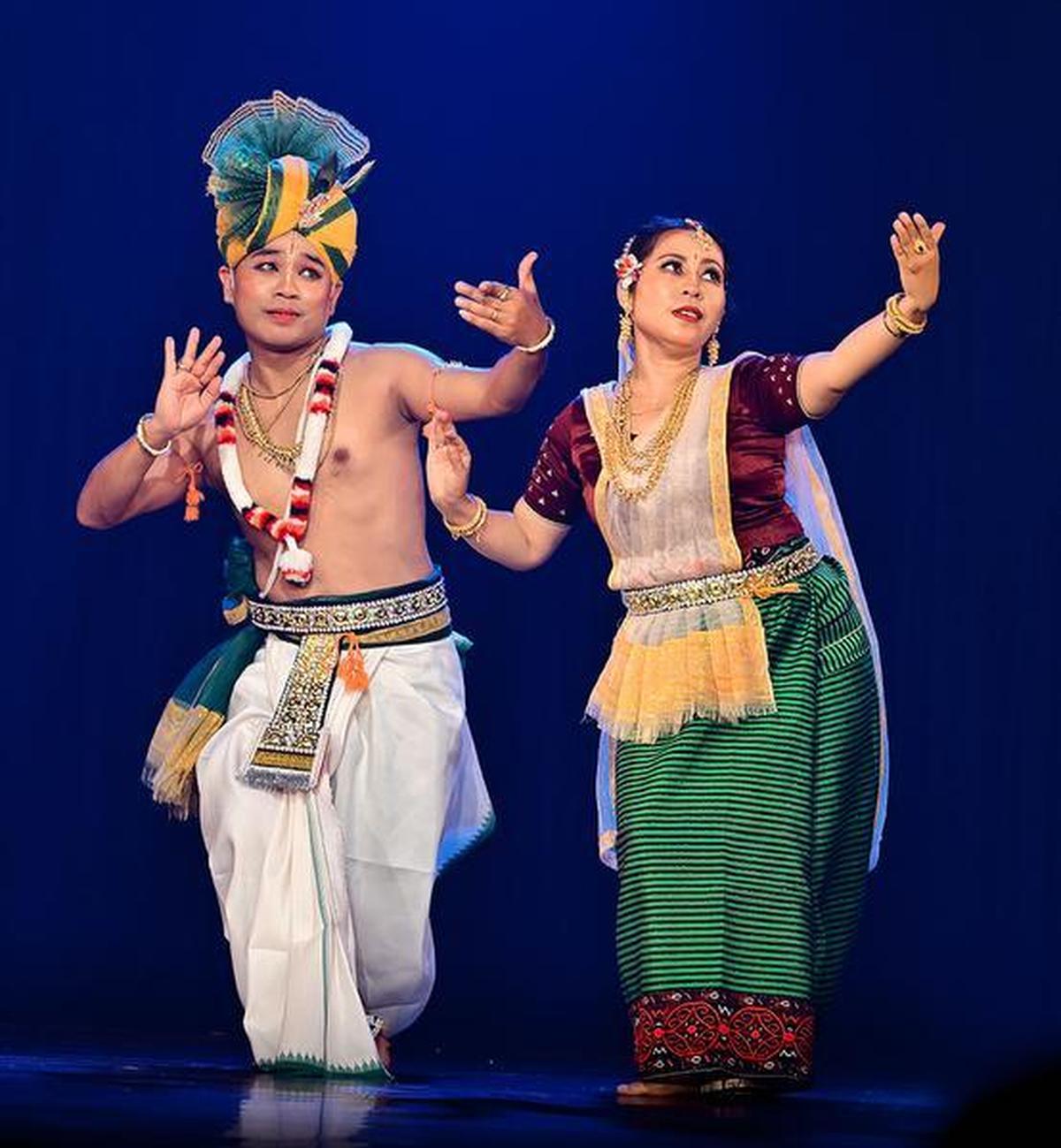
Basu Sinam and Monika Devi performing Manipuri at Bharatiya Vidya Bhavan as part of Natya Darshan seminar 2025.
| Photo Credit:
VELANKANNI RAJ B
Basu Sinam and Monika Devi, the nimble Manipuri dancers presented the dance drama, ‘Madhura Bhakti Prem Leela’ based on Jayadeva’s Gita Govinda. Their expressions though deceptively underplayed, were no less effective. They played out the ups and downs of the Krishna-Radha love story, with light movements and abhinaya was executed through their face and body as well. They ended with a brisk tandava — ‘Shiva Stuthi’ by Sankaracharya.
Poor time-management by Natya Darshan and Karthik Fine Arts led to Odissi dancer Arushi Mudgal starting one hour late. Graceful and uncluttered are words that come to mind when one watches her dance.
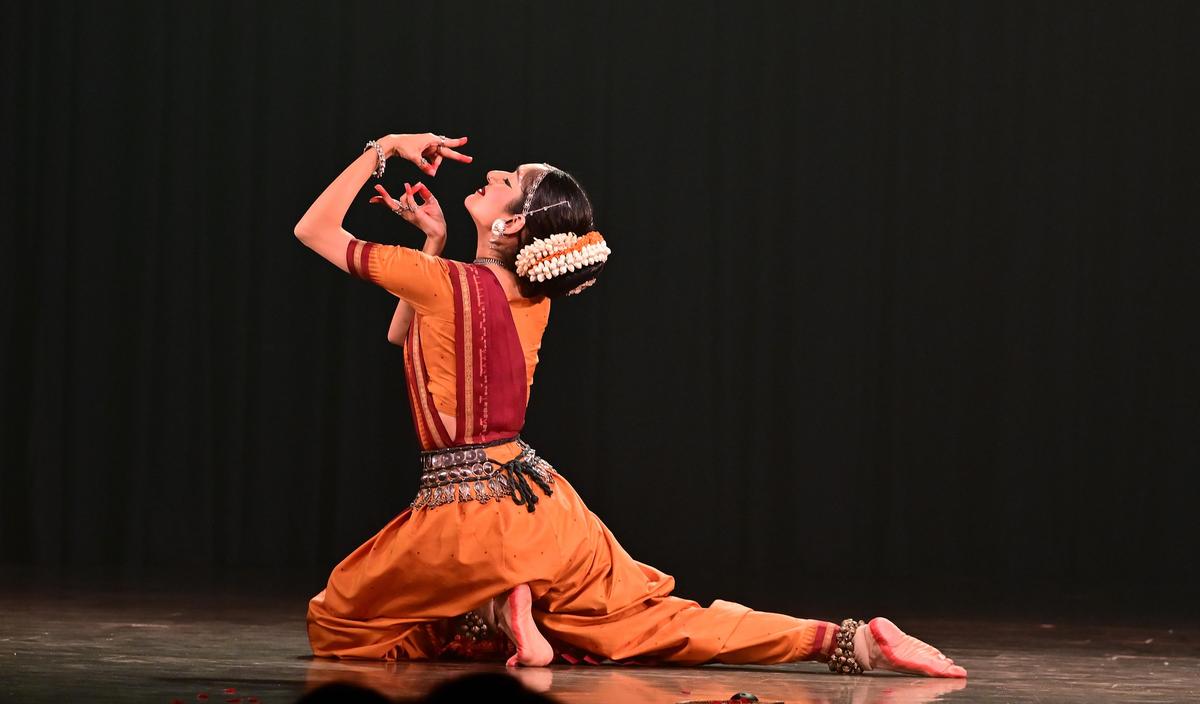
Arushi Mudgal at Bharatiya Vidya Bhavan as part of Natya Darshan seminar 2025.
| Photo Credit:
VELANKANNI RAJ B
There seems to be a switch in her artistic journey — she is pushing her boundaries in abhinaya. Her ‘Karpooram narumo’ in Khamas (Nachiyar Thrumozhi, Janani Hamsini) was a delicate balance of bhakti and sringaar. There were moments when she got past the bhakti to the tender moments soaked in romance. An unusual viewpoint. Andaal’s devotion seemed to have been personal, and who is to say what a personalised equation with god should or should not be.
The other abhinaya piece was a Birju Maharaj’s piece on Kausalya’s reaction when told about Rama’s vanavas. Her Ganesh Vandana was musically brilliant, a layered kavit-kind of recitation followed by raga alaap accompanied by mridanga bols. The ending was a Pallavi (Gunakari, Triputa, Gopal Chandra Panda), choreographed by her guru Madhavi Mudgal. Arushi’s nritta is always effortless and spot- on, but felt a bit linear.
Published – December 27, 2025 02:43 pm IST

