

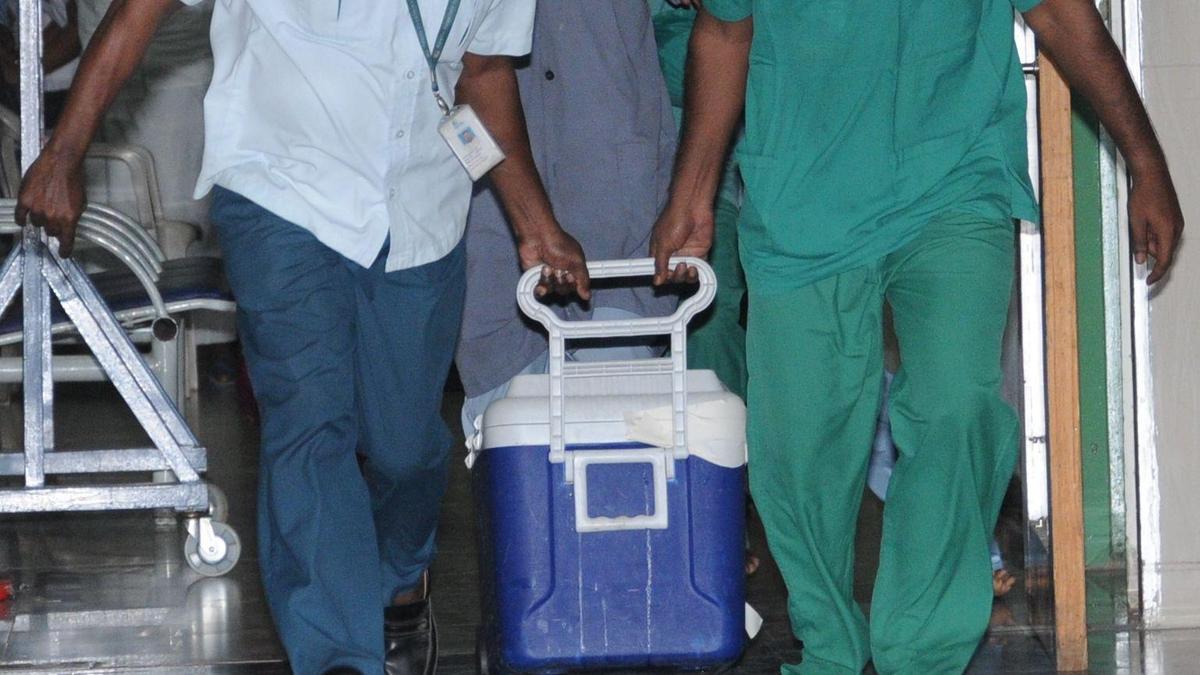
According to organ utilisation data, 65 hearts and 86 lungs were utilised in 2025, accounting for 27.08% and 17.91% respectively. In 2024, 35.82% hearts and 16.61% lungs were utilised. Image used for representational purposes only
| Photo Credit: R. Ashok
From 2021 to 2025 (up until November 27), the number of major organ transplants rose from 280 to 785 in Tamil Nadu, an increase of nearly 180%. While kidneys and liver continue to be utilised at high rates — averaging 80% to 90% — heart and lung transplants remain far behind due to organ-specific challenges such as viability thresholds and limited preservation windows.
Tamil Nadu has witnessed a steady rise in the number of deceased donors in recent years — 156 in 2022, 178 in 2023, 268 in 2024, and 240 in 2025. However, the proportion of donors whose hearts and lungs are utilised remains low, highlighting the challenges in transplanting these two vital organs.

According to organ utilisation data, 65 hearts and 86 lungs were utilised in 2025, accounting for 27.08% and 17.91% respectively. In 2024, 35.82% hearts and 16.61% lungs were utilised.
Organ utilisation
Officials agreed that though the number of deceased donors has increased, organ utilisation has not risen proportionately. “Globally, lung utilisation rates are low. One of the most common reasons for rejection is donor-recipient size mismatch. Often, the organ retrieval team performs a bronchoscopy on the spot and rejects the organ due to reasons including secretions that indicate infection. Prolonged ventilation can impact the lungs. We should focus on making the process quicker and prevent sepsis,” an official said.
Paul Ramesh, Senior Consultant, Heart and Lung Transplant Surgeon, Kauvery Hospitals, Chennai, said it was necessary to look at the ischemic time and the number of units performing kidney and liver transplants. “The chance of getting an organ from a donor pool is highest for liver and kidneys, accounting for 70% to 80% of the donor pool. Nearly 25% to 30% of hearts and 15% to 20% of lungs from the donor pool are usable. The reason for the organs being unusable lies in the ischemic time for heart transplant, which is four to six hours, while it is eight to 10 hours for lung transplant,” he explained.

D. Senthil Kumar, Senior Consultant, Cardiac Sciences, Cardiothoracic and Vascular Surgery, Heart and Lung Transplantation, Rela Hospital, said once a heart and lung becomes available for donation, they review medical reports thoroughly and evaluate heart function, ejection fraction, and inotropic support to decide suitability. “Lung utilisation depends on factors like aspiration, infection, ventilator-associated pneumonia, and arterial blood gas analysis. Often, organs are rejected on the operating table due to issues such as heart plaques, on table dysfunction, size mismatch, lung contusion, or aspiration. Approximately in 10 donor assessments, typically only three to four hearts and one lung are usable, considering all vital parameters and ischemic time,” he said.
Way forward
Cadaver management is the crucial step in increasing the number of organs made available, he said, stressing the importance of cadaver management teams to maintain brain-dead donors and ensure aseptic precautions.
Dr. Paul Ramesh added that since many centres perform liver and kidney transplants, organs often travel shorter distances. “Considering the ischemic time, there are certain logistical issues for teams retrieving and transporting heart and lungs. This includes transportation, air access to places, as well as cost for logistics. This also limits the use of good organs as the donor team should be able to reach the hospital within the organ ischemic time. Once brain death occurs, the heart and lungs have a lesser ability to survive longer times without oxygen,” he said.

Dr. Senthil Kumar said that organs from places like Salem, Dharmapuri, Thoothukudi, or remote areas may have limited access to commercial flights and require long road transport. Teams may need chartered flights or helicopters, increasing costs that recipient patients often bear.
Experts stressed the need to maintain optimal cardiac status including acidosis correction and optimal and judicious use of inotrope.
Published – December 18, 2025 03:10 pm IST

