

(This is the latest edition of the Political Line newsletter curated by Varghese K. George. The Political Line newsletter is India’s political landscape explained every week. You can subscribe here to get the newsletter in your inbox every Friday.)
Why laws on hate speech and menstrual leave are bad ideas that will create more harm than good
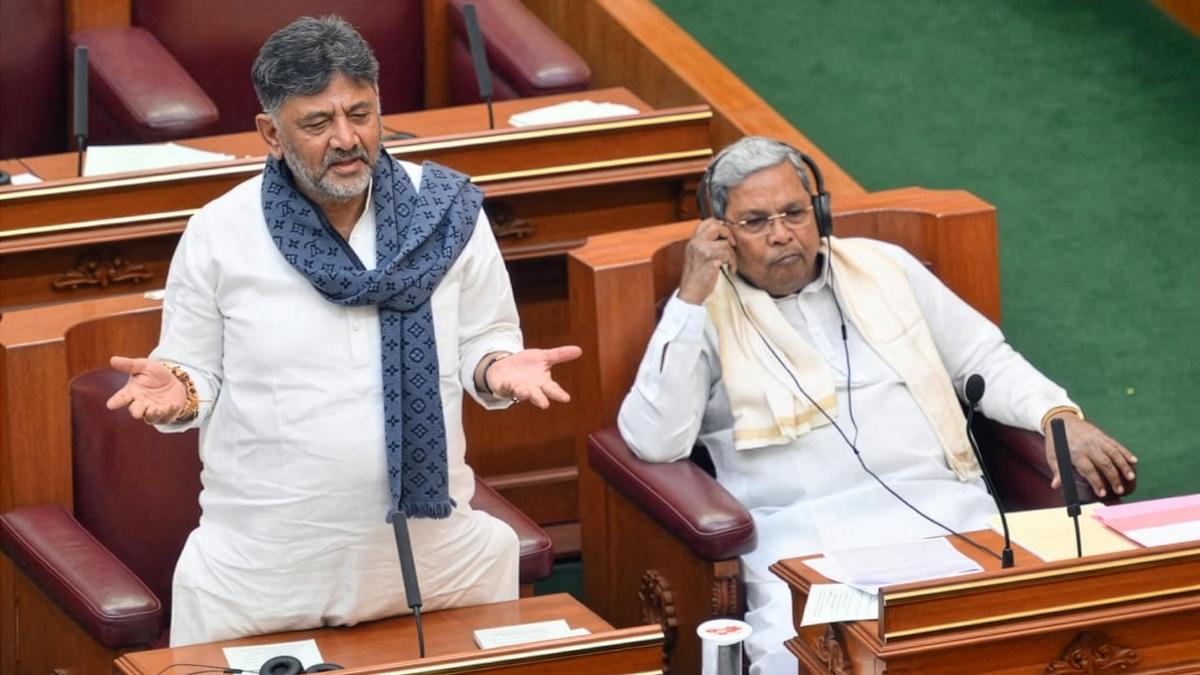
The power tussle between Chief Minister Siddaramaiah and Deputy Chief Minister D. K. Shivakumar in Karnataka is dormant for now. Expansive welfare schemes have stretched the State’s finances, and now the Congress government is turning woke in its Great Society ambitions. On the anvil are a sweeping thought-and-speech control law, and a proposal to legislate menstrual leave for women, which is already in force through a government order.
The Hindueditorial pointed out that when the state controls speech, for whatever lofty aims, outcomes are nearly always bad. Disharmony, hate, and enmity are unquantifiable and indefinable under law even though all that exist around us. When there is a law that seeks to control hate, those who have more power will use it against those with less power. There is no good example of law successfully curtailing hate speech anywhere in the world or promoting harmony; all examples point to such laws being arbitrarily used to throttle free speech in the interest of powerful groups and governments.
The old wisdom is still valid: Free speech be curtailed only when it can lead to immediate violence. Speech cannot be restricted because it is offensive to someone, as all speech is offensive to someone or the other. If you say India is a Hindu rashtra, some people will be offended; if you say India is not a Hindu rashtra, some others will be.
As for the Congress, it will not even be able to make any political gains out of this ill-advised Bill. In fact, it may pay a heavy price for it in the future. The BJP is now opposing the proposed law, but when it comes back to power, it will happily use the same law against the Congress. Consider this: State Minister Priyank Kharge (son of Congress President Mallikarjun Kharge) is strident in his criticism of the RSS. In the future, when this proposed law is in force, it could be used to punish him when his party is not in power.
Karnataka is also planning to legislate one day of paid menstrual leave per month for women. The argument for such a move is that for some people, periods cause severe pain or symptoms that impede work; planned leave can help them. The hope is that it will normalise conversations around menstruation. While some women do face physical difficulties during periods, menstrual leave is a fraught idea.
Kathyayini Chamaraj, a prominent voice in Bengaluru, and a member of a committee that the State government appointed to study the proposal, opposed the move. Her reasons are recorded in the committee’s report: “This will not be of help to agricultural labourers who are known to go back to work after delivering their babies…. Women are still treated as untouchable during their periods, and if a woman takes leave at this time, it may cause resurgence of the practice of treating her as an untouchable…. Our opinion on the menstrual leave policy is that, it will reduce women’s employment, which is already low…. It will stigmatize and depict women as weak.… Also monitoring whether Women in Unorganized Sector are given leave by their employers is difficult….”
As early as 1912, a school in Kerala made allowances for menstruating students and teachers. In 1992, Bihar under Lalu Prasad Yadav was the first State to grant two days of leave every month to menstruating women. The Kerala example was a progressive one as girls were missing exams because of menstruation. I am not sure the same principle applies in the case of Bihar government employees. The 21st century debate on menstrual leave exists in a different context.
Opposing views of some prominent women of India can be found in this piece by Sunalini Mathew. “I don’t think it’s a woman who thought up period leave, and the man probably thought he’s doing something nice for women. I think it’s very condescending,” says Prof Sujata Sriram, Psychologist and Dean, School of Human Ecology, Tata Institute of Social Sciences.
The idea sounds empathetic towards women but this, and many such ideas in the same basket of new-age progressive politics black out any possible discussion on labour rights. Ideas such as menstrual leave and Diversity, Equity, Inclusion (DEI), may not be as radical as they are presented to be. They are undermining labour solidarity and any residual possibility of understanding and articulating the accelerating exploitation of labour. Technology driven work extracts the last ounce of the value created by the labour for capital owners. The dialectical conflict in the situation is between those who sell labour and those who own the capital, not between those who menstruate and those who do not; not among the various ethnic and gender identities within the labour class.
The precarity of labour is the single most important issue of our time, and most of the other issues are linked to either that or unemployment. Contract employment and the delegitimisation of unioninsation had already undone the collective bargaining of labour. The arrival of the internet and gig economy obfuscated the idea of labour itself. The most precarious worker is labelled a contractor or an entrepreneur, through a fantastical legal fiction that underlies the gig economy, though some measures are being attempted to regulate this.
There is a flood of evidence that capital owners manage to accrue more and more of the wealth at the cost of the worker. “…One of the main reasons a large share of the global population continues to live in highly unequal countries is the rising share of national income accruing to capital (through profits, rents, and dividends) compared to labour (through wages and salaries). Between 1990 and 2024, the capital share of national income increased in 56% of countries, covering 74% of the world’s population..” See this report by The Hindu Data Team.
The route to a fairer and stabler society is to provide wages that ensure dignified living for workers in general, and work for all those who need it, and have decent norms of employer-employee relations. In the absence of such measures, menstrual leave will merely act as a distraction; hardly any woman in a private-sector job or in informal work will be able to use it. No woman on contract employment is going to use it; nor will any woman with career ambition. Government employees who are the minuscule pampered segment of our labour class will be able to use it. The most precarious among the women workers will not avail themselves of this because they would not risk job loss.
Bad ideas sound radical, even transformational. Laws against hate speech and for menstrual leave are good examples.
Published – December 13, 2025 12:19 pm IST

