

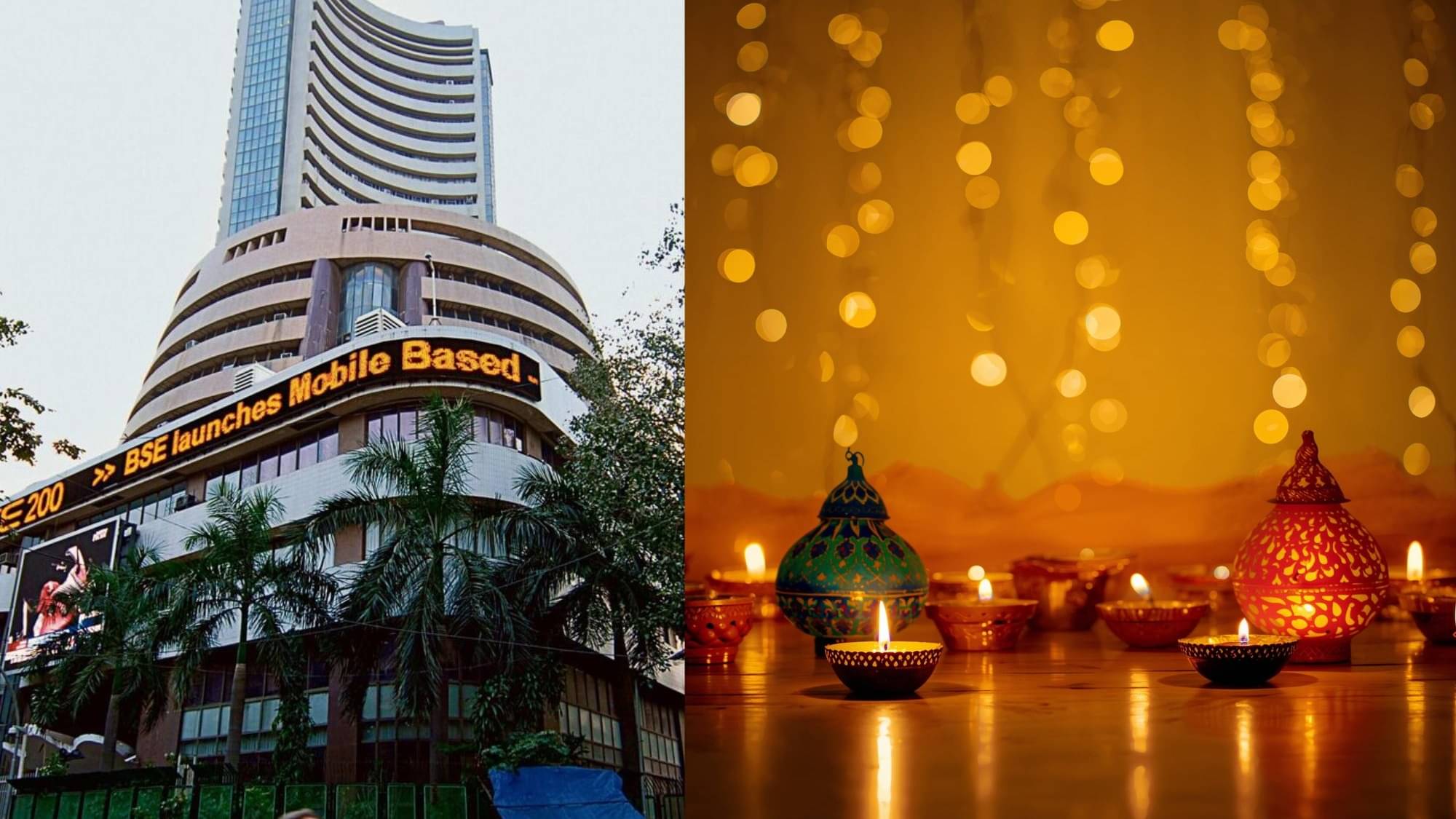
India’s stock markets ushered in the new Samvat Year 2082 on a positive note during the special one-hour Muhurat trading session on Tuesday, as investors welcomed the festive season with optimism and steady buying interest. Both benchmark indices — the Sensex and Nifty 50 — ended marginally higher, reflecting firm global cues and resilient domestic sentiment.
The BSE Sensex rose 62.97 points, or 0.07%, to close at 84,426.34, after touching an intraday and 52-week high of 84,665.44. The NSE Nifty 50 gained 25.45 points, or 0.10%, to settle at 25,868.60, also marking a record high of 25,934.35 during the session. The Bank Nifty, however, slipped slightly by 26 points, or 0.04%, to 58,007.20.
Among the top performers on the Nifty 50 were Bajaj Finserv, Cipla, Infosys, Axis Bank, JSW Steel, and Grasim Industries, which witnessed strong buying activity. On the other hand, Kotak Mahindra Bank, ICICI Bank, Asian Paints, UltraTech Cement, and HCL Technologies were among the major laggards, while Apollo Hospitals ended unchanged.
On the sectoral front, Nifty Media led the gains with a 0.56% rise, followed by Nifty Metal (up 0.40%) and Nifty Pharma (up 0.34%). The broader market too remained buoyant, with Nifty Smallcap 100 climbing 0.52% and Nifty Midcap 100 adding 0.11%.
The special Muhurat trading window, held between 1:45 pm and 2:45 pm, marks the symbolic beginning of the new accounting year for traders and investors. This year’s session was the eighth consecutive Muhurat session to close in the green, underscoring continued market confidence.
Market experts remain upbeat on the outlook for Samvat 2082, predicting that Indian equities could move out of a consolidation phase into a period of steady, broad-based growth. Analysts forecast the Nifty 50 could touch 30,000 by next Diwali, supported by robust corporate earnings, strong domestic liquidity, and stable macroeconomic fundamentals.

