

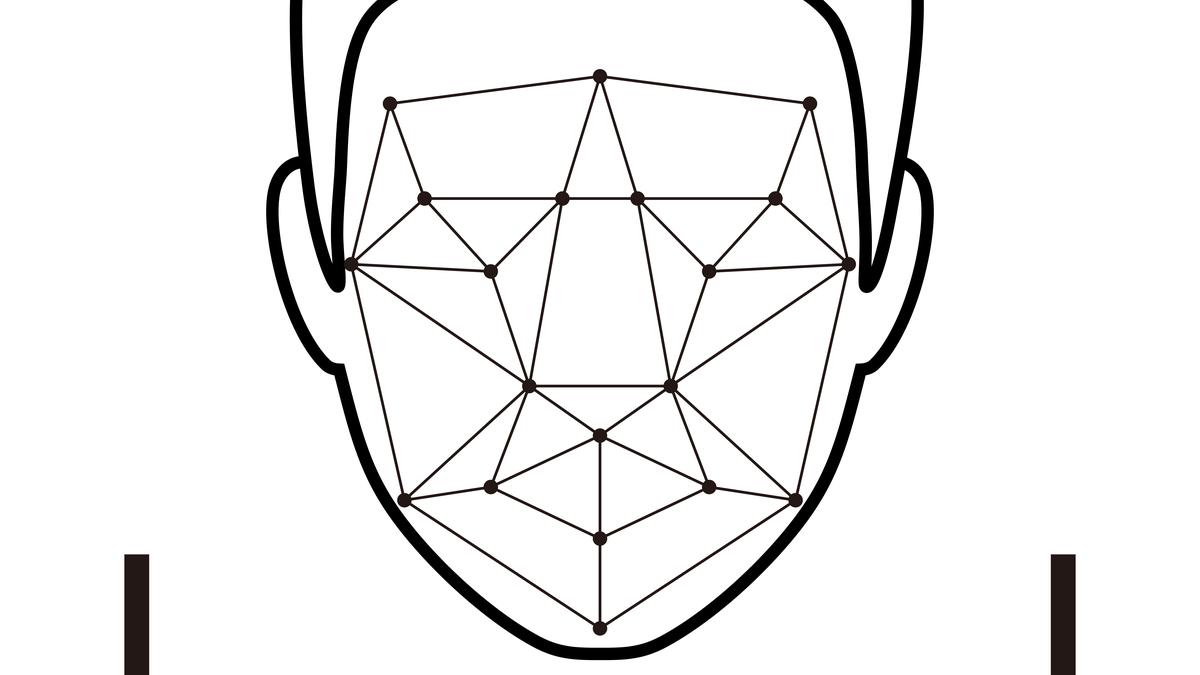
‘What is at stake is a choice between authenticating and the authentic, between dehumanising and dignity’
| Photo Credit: Getty Images
In American novelist, Kurt Vonnegut’s novel, Player Piano, the author imagines a society where human labour is displaced by machines. Published in 1952, the novel shows how high levels of automation create an extremely polarised society with engineers running the machines on one side and the working class at the mercy of machines. In the novel, Finnerty, a brilliant engineer, upon realising how such automation results in dehumanisation, wryly remarks, “If only it weren’t for the people, the goddamned people, always getting tangled up in the machinery, earth would be an engineer’s paradise.” Seven decades later, we are witnessing how welfare delivery in India is turning into a software “engineer’s paradise” with a technocratic union government and its digital automation tools on the one side and frontline workers at the mercy of these tools on the other. The latest of these is the mandatory use of Facial Recognition Software (FRS) in Anganwadis.
Anganwadis were first established in 1975 to address child malnutrition as part of the Integrated Child Development Scheme. There are about 14.02 lakh anganwadis in India and every centre is meant to have at least one Anganwadi worker (AWW) and one Anganwadi helper, who are women from the local community. Along with preschool and other services, each Anganwadi is entrusted with providing legally mandated Take Home Rations (THR) for children under three years and for pregnant and lactating women (under the National Food Security Act, 2013).
Aim of verification, hurdles
In 2021, the Union government launched the Poshan Tracker, a centralised application platform, to monitor nutrition initiatives. The AWW has to install the Poshan tracker app on her smartphone and periodically upload the nutritional status of children. The app requires regular updates which many AWWs are not equipped to do. From July 1, the THR for pregnant/lactating women will not be given unless these women rights-holders authenticate their faces through the FRS, which is now integrated with this app. To get to this stage, e-KYC has to be first completed, where the woman’s Aadhaar and biometric details are entered and verified by OTP. The purpose of these appears to be two-fold. First, that a child or woman is not faking to be somebody else to get food. Second, that a child’s food is not stolen by the AWW or anyone. That is, children and AWW are pre-supposed to be guilty of wrongdoing and not pre-supposed to be innocent; which is at odds with the principles of natural justice where one is innocent until proven guilty.
Testimonies of several AWWs underscore the chaos spawned by the use of the FRS. Many phone numbers have changed, the phone is usually not with the woman, and so there are trust issues in sharing an OTP. Even once the e-KYC is completed, there are errors in matching the faces recorded in the software for reasons unclear to the AWWs. Further, the phones of AWWs do not have the capacity to process such heavy data and often hang. Network connectivity is often patchy resulting in large delays. Errors in face matching means that a photograph has to be shot multiple times, causing annoyance to all involved. Even though the AWW personally knows all the women and children concerned, and can vouch that they are authentic, she cannot give them food when the app fails to authenticate as she does not have the power to override the app. Being frontline functionaries means that AWWs are also at the front end of facing the ire of the ‘authentic women’ who are unable to have their faces authenticated.
Any intervention must be introduced to address the main problems people are facing in receiving their entitlements. In the context of THR, there are at least five major problems: poor quality of rations;irregular supply of THR; the budget for THR for children which is ₹8 per day a child has not been revised since 2018; corruption in the granting of contracts, and supply by large commercial entities despite orders by the Supreme Court of India since 2004 that the production and distribution should be decentralised and preferably through self-help groups and mahila mandals. Women faking pregnancy or children faking to get rations is not one of the core problems here. However, this is what the FRS appears to be solving. Similar to technological interventions in other welfare programmes, the FRS has also been introduced without any consultation with Anganwadi staff. If the government has any reports on massive fraud with “fake beneficiaries” being registered, these must first be made public for scrutiny. The best way to verify people in anganwadis is through community monitoring.
In perspective
Technologies such as the FRS have usually been used in criminal investigations. While there are several concerns in using FRS in such investigations too, using such technologies to identify women and children from vulnerable communities appears to treat them as criminals and not as citizens. In fact, the FRS is banned even in San Francisco, U.S., the Mecca of digital technologies. Early childhood care cannot be held hostage till a software becomes better at recognising mothers. Extending Vonnegut’s caution, women and children should not become laboratories in an “engineer’s paradise”. After all, what is at stake is a choice between authenticating and the authentic, between dehumanising and dignity, and between fracturing and fraternity.
Rajendran Narayanan is a social scientist and is also affiliated with LibTech India, a Centre based in Collaborative Research and Dissemination (CORD). Dipa Sinha is a social scientist. The views expressed are personal
Published – September 18, 2025 12:32 am IST

