

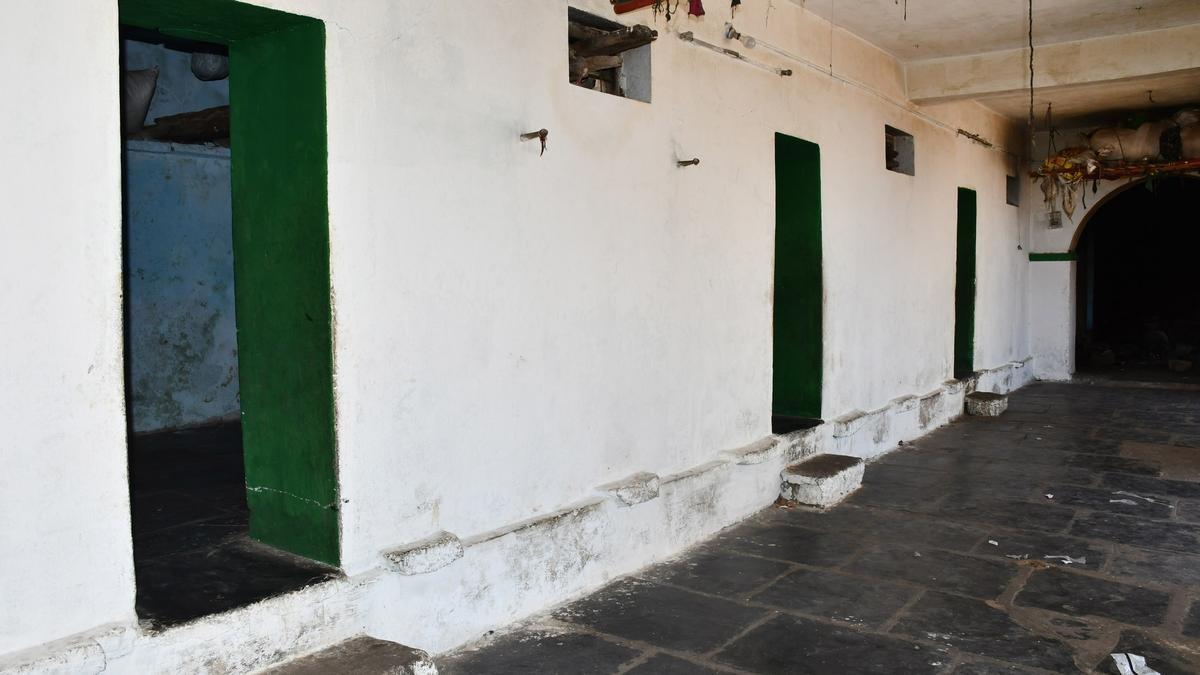
When Mabubi Betageri from Hanumanal village near Dharwad came to Dawal Malik after her marriage to Ismail Mujawar, a lineman with HESCOM, she felt acutely uncomfortable living in a house that had no doors. “For almost two months, I could not sleep properly as I kept feeling that someone may barge in any time,” recalls Mabubi, a Class X passout, who now conducts tailoring class for other girls in the hamlet.
Mabubi Mujawar narrating her initial experience of living in a house with no doors in Dawal Malik.
| Photo Credit:
KIRAN BAKALE
But over time she has got used to the idea, with her house not being an exception. None of the 80-plus houses in the hamlet located just a kilometre away from Mulagund town in Gadag district in Karnataka have doors because they believe that Hazrat Dawal Malik, a Sufi saint, protects them all. A dargah named after him is located on a hilltop and at its foot is the hamlet.

Steps that leads to Hazrat Dawal Malik Dargah.
| Photo Credit:
KIRAN BAKALE
Ever since Dawal Malik became her home, Mabubi has seen things change, concrete roads have been laid, Urdu school building is being built, water is being supplied through pipes once in five days, steps have been laid with barricades for the people to reach the dargah on the hilltop. But houses still continue to be doorless and no cradles are bought for the newborn.
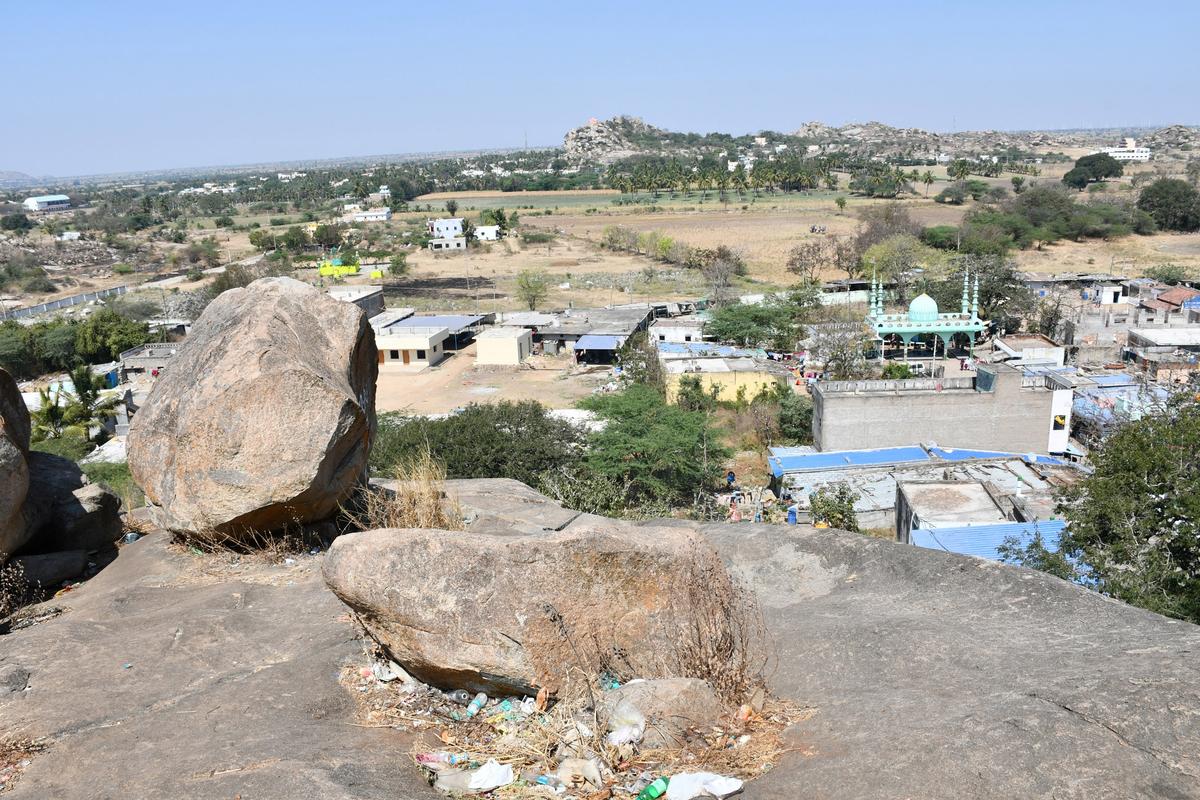
A view of the hamlet (Dawal Malik) having houses with no doors from the Hazrat Dawal Malik Dargah located atop a hill just a kilometre away from Mulagund town in Gadag district.
| Photo Credit:
KIRAN BAKALE
Poor families
Siblings Abdul Razak Mujawar and Noor Ahmed Mujawar, who are 50-plus now, recall having just around 20 houses in the village when they were children. Now there are 80-plus houses, most people here having the same family name “Mujawar.” The meagre land holding that these families had has been further split leaving them little less than 20 guntas for farming each on an average. Apart from the Urdu school in the hamlet, there is a Kannada medium school nearby. Education has brought dividends. Few youths from the hamlet are now working in Gulf countries and a few have government jobs. But that has not changed the nature of the houses they live in.
Doors are not in the list of construction materials even when a new house is built. “Having a door for the house is bad for the family. We have seen families suffering because they decided to install a door. We know Hazrat Dawal Malik is protecting us all. There is no theft in the village. There are cases of a few who stole from the village coming back to surrender stuff since their act caused them suffering,” believes Abdul Razak.
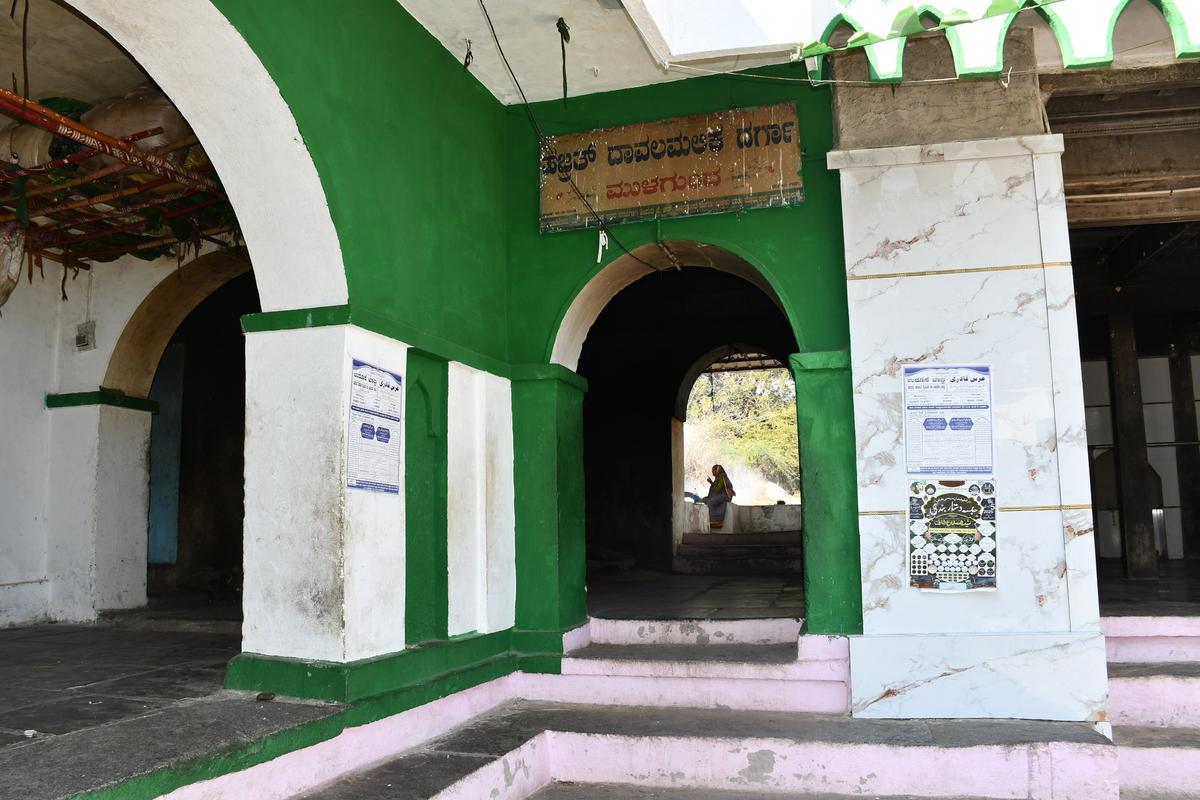
The entrance to the steps leading to Hazrat Dawal Malik Dargah.
| Photo Credit:
KIRAN BAKALE
Legends galore
Whoever you meet in the doorless village has similar tales to tell and there are several legends woven around the mystic personality of Hazrat Dawal Malik.
There is a legend of tiger protecting the dargah, which was killed by a newly-wed couple, who ultimately died mysteriously. There is a legend of Hazrat Dawal Malik, who reportedly came on horseback, throwing his spear to create spring of water for the people. The versions vary from person to person but they all believe he is the presiding deity of the hamlet.
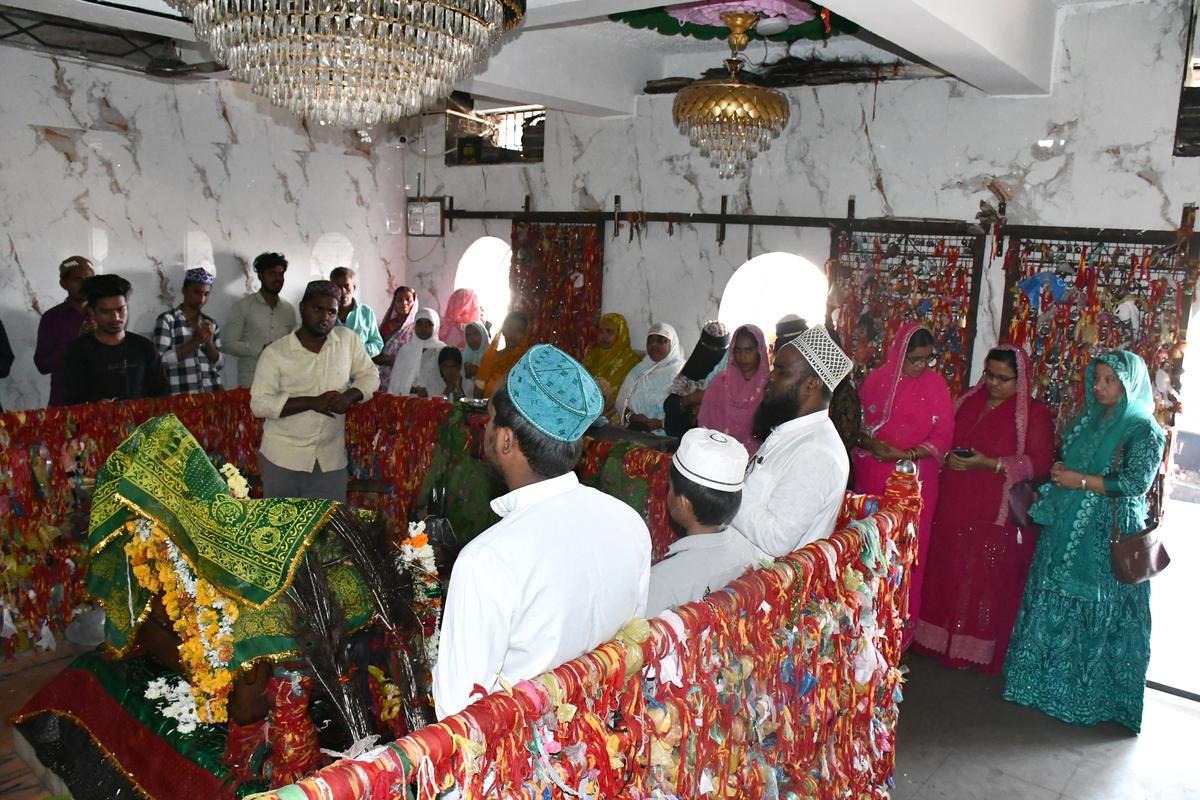
The inside view of Hazrat Dawal Malik Dargah.
| Photo Credit:
KIRAN BAKALE
People of all faiths come here
What is of more significance is that Dawal Malik attracts people of all faiths. Almost every day there are visitors to the Dargah situated atop the hill and on every “Amavasya” (New Moon Day) the footfalls are more.
“Apart from Muslims, scores of Hindus and even a few Christians come to make offerings,” said Shamsuddin Mujawar, who had got his turn to be caretaker of the dargah for a week when this reporter visited the place. Like him every Mujawar family in the hamlet gets a chance to be caretaker of the dargah for a week by turns.
The devotees come to the hamlet to offer sugar to the presiding deity and either tie a thread to railings or put a lock after tying the thread. When their wish is fulfilled they come back again making more offerings and untie the thread or unlock a lock. They also pour salt over “gadbadshavali” located on the way to the hilltop, a practice, which they believe will cure them of skin diseases.
Rehaman Mannur from Koppal comes to Dawal Malik in his autorickshaw with his family at least once in a month. Siddappa Parasappa Muddi from Hubballi believes the visit to the dargah of “ajja” (Dawal Malik) is good for his family. He used to come with his mother earlier and now comes with wife and children. “Many from our community make offerings on a regular basis,” says Hubballi resident Shobha Bakale, who belongs to SSK Samaj (Pattegars).
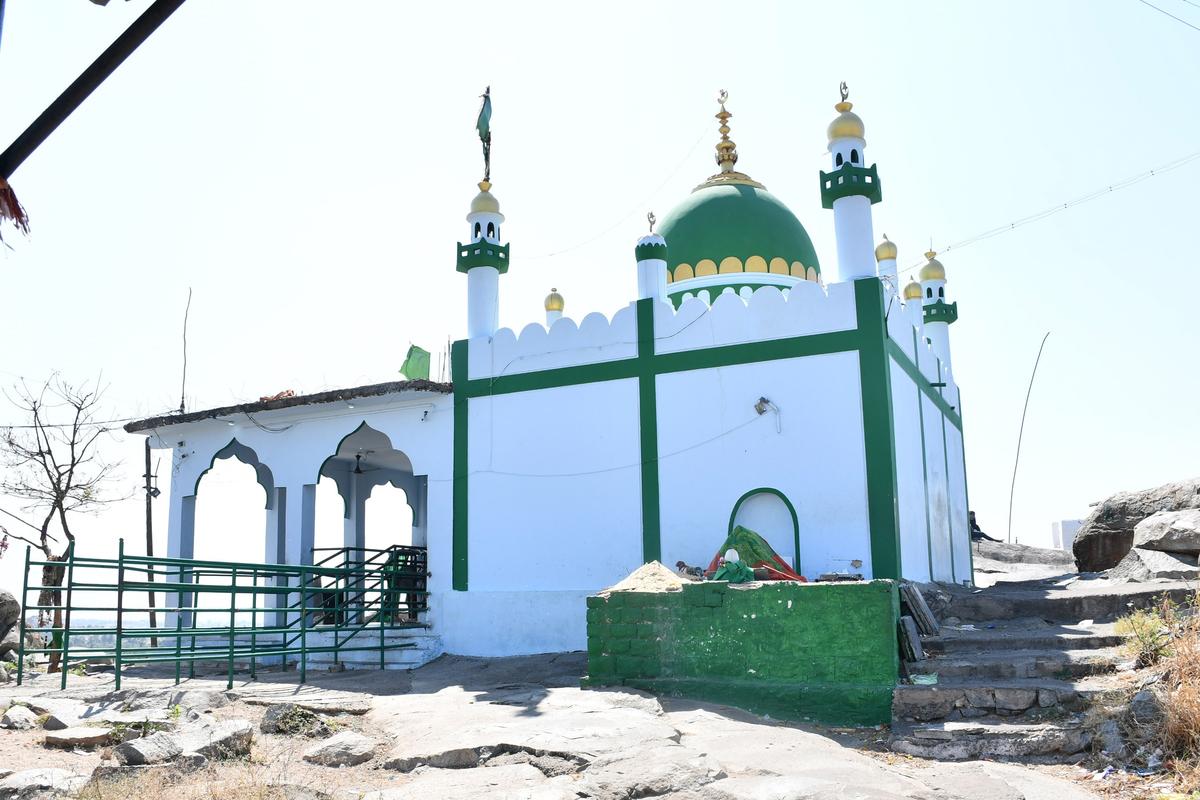
Hazrat Dawal Malik Dargah located atop a hill just a kilometre away from Mulagund town in Gadag district.
| Photo Credit:
KIRAN BAKALE
Not much info
There is not much factual information available on the Sufi. According to Abdul Razak Mujawar, Dawal Malik was a contemporary of Hazrat Bande Nawaz who came to the place some 800 years ago and stayed there for around 40 days. “People believed he was sharana (saint) and visited the place to seek his blessings. Our grandfather narrated the stories, which were narrated to him by his grandfather,” he said.
There is also a lesser known legend linking Dawal Malik to Mallikarjunswamy of the period of Kalyana Chalukyas. In his doctoral thesis Mulagund Naadu: Ondu Adhyana, Prof. Dhanavanth Hajavgol says that Mallikarjunswamy had a disciple by name Dawal and after their demise, the Dawal-Malik dargah was built in memory of unique rapport that the guru-shishya shared. In his thesis, he also mentions a proverb in the region “Illiya manegalige baagilugalilla, baanatige horasilla, koosige totilla”, which means there are no doors for the houses here, no cot for the woman who has just given birth to an infant and no cradle for the newborn. These practices are still in vogue.
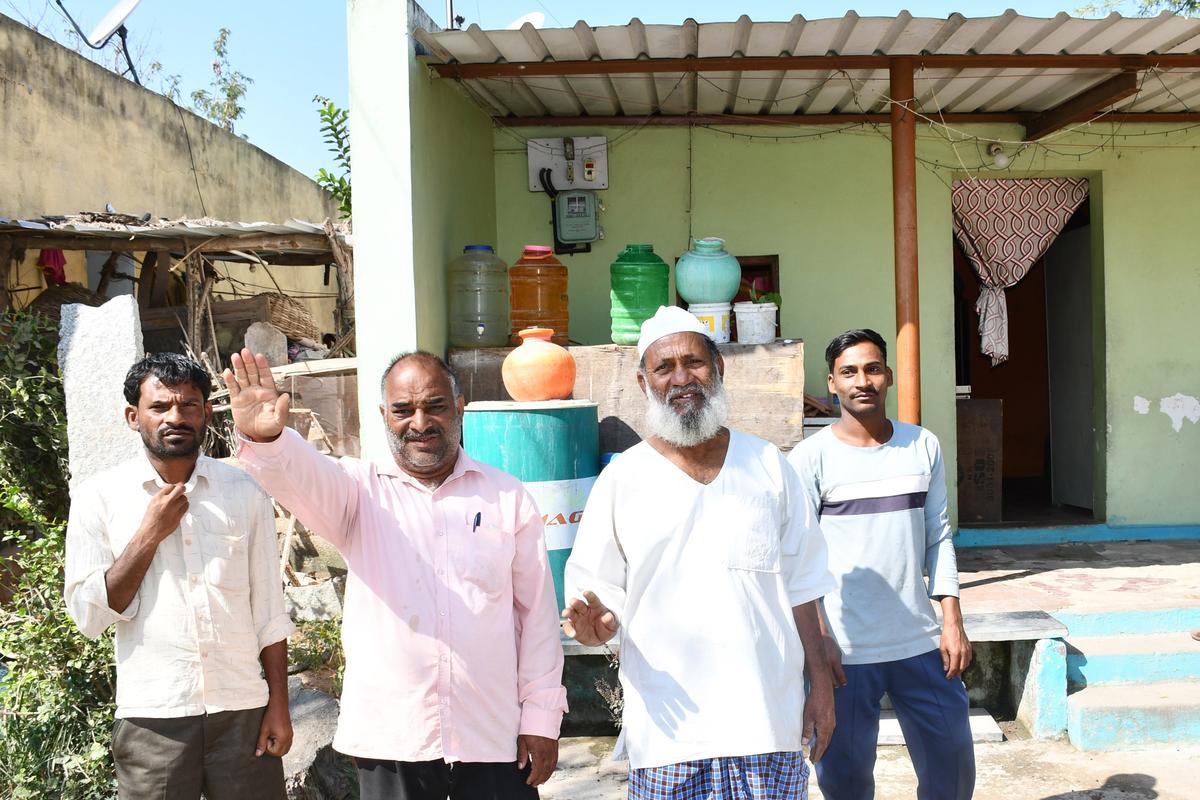
Siblings Noor Ahmed Mujawar and Abdul Razak Mujawar narrating the legend of Hazrat Dawal Malik standing before the house that has just a curtain as its door in their hamlet Dawal Malik.
| Photo Credit:
KIRAN BAKALE
For generations
It is evident that for generations, the place has a syncretic tradition. Both Hindus and Muslims have been offering prayers at the dargah and it continues to this day. In fact, every year during Muharram, Hindus from Mulagund Town throng Dawal Malik and hold rituals and celebration for five days, says Abdul Rasheed Mujawar, who runs a petty shop selling various puja and other materials. His son Abdul Farooq is a civil engineer in Chitradurga now.
Zubeda Mujawar runs similar shop to eke out living. Her shop and few other shops selling various articles including grocery, however have metal doors and shutters. She says it is to prevent “entry of pet animals and stray dogs.” But like others, her house too has no doors.
Published – February 07, 2025 08:41 am IST

