

The United Nations Population Fund (UNFPA) is an agency within the wider UN that is funded by donor governments, intergovernmental organizations, the private sector, foundations and individuals. Contributions provide support to women and children in over 150 countries to help end preventable maternal deaths worldwide.
Here’s how your donations to UNFPA help create a world where every pregnancy is wanted and every childbirth is safe.
1. Operate and supply maternity clinics in crisis zones.
© UNFPA Ukraine/Olha Lavryk
Women do not stop getting pregnant or giving birth in conflict zones and crisis settings. In locations where health care systems may be disrupted or too remote, UNFPA provides supplies and equipment to hospitals and clinics — or helps set up mobile maternity clinics — to ensure that women can access lifesaving maternal health services.
In Ukraine, the Kherson City Perinatal Center was struck by shelling three times. UNPFA is now rebuilding the center underground in an effort to protect women who are in labor from shelling.

UNFPA has provided long-standing support to maternity hospitals in Gaza and is focused on delivering reproductive health (RH) kits to hospitals across Gaza. These kits contain individual clean-delivery supplies, pharmaceuticals, medical devices, and equipment for both basic and comprehensive emergency obstetric care. Unfortunately, the current crisis has jeopardized the delivery of necessary support and equipment.
2. Provide safe and reliable medical resources to midwives and women before and after birth.

Sterile equipment and materials for a safe and healthy birth are not always readily available in emergency situations or crisis zones.
In Sudan, a midwife named Awatef told UNFPA about how she assisted four women fleeing violence and delivered four babies with limited resources. “I delivered them in the bush, with only very basic sterilization — I had nothing but water and soap.”
Donations to UNFPA fund two types of kits used before and after birth: The Emergency Birth Kits contain basic sterilized equipment, reducing infection risks during childbirth, while the Mama Kits provide new moms with supplies like postpartum pads, baby diapers, baby clothes and blankets to care for themselves and their newborns after birth.
3. Train midwives.

UNFPA invests heavily in training midwives in remote or conflict-affected regions. High-quality midwifery services can decrease mortality rates by more than two-thirds.
By deploying trained midwives and increasing educational opportunities for local health care workers, UNFPA can create lasting change in remote or emergency settings. The cost-effective, community-focused strategy also helps ensure that every woman and child has access to quality care regardless of their location.
By building a robust midwifery workforce, UNFPA not only addresses immediate health needs but also strengthens health systems and chips away at the worldwide deficit of nearly 900,000 midwives.
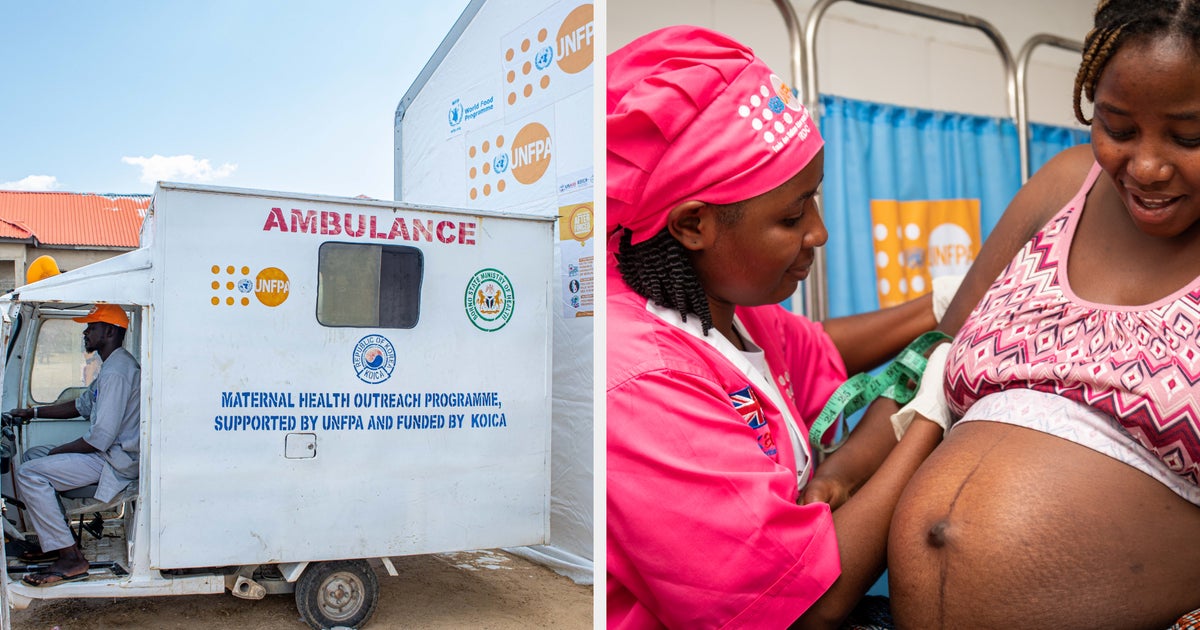
4. Deploy mobile clinics to assist regions that need help most.

©UNFPA Nigeria/Seyi Fashina
In 2023, 62% of preventable maternal deaths happened in fragile and conflict-affected settings. Frontline health workers have cited the dangers and risks of giving birth in these types of settings for mother and child. UNFPA tackles this issue by deploying mobile clinics in more than 59 crisis-hit countries to offer essential prenatal and postnatal care.
In the West Bank’s Area C across Hebron, Bethlehem, Qalqilya and Tulkarem, UNFPA supports four mobile clinics. These teams visit vulnerable and isolated villages of 2,000 to 3,000 residents weekly to deliver a range of primary health services — including essential prenatal and postnatal care to pregnant women and their children.
“The clinic is a comfort,” Naheel Zeer, a member of one of these communities, said. “But we need more. We are so far from any doctors or hospitals.”

