

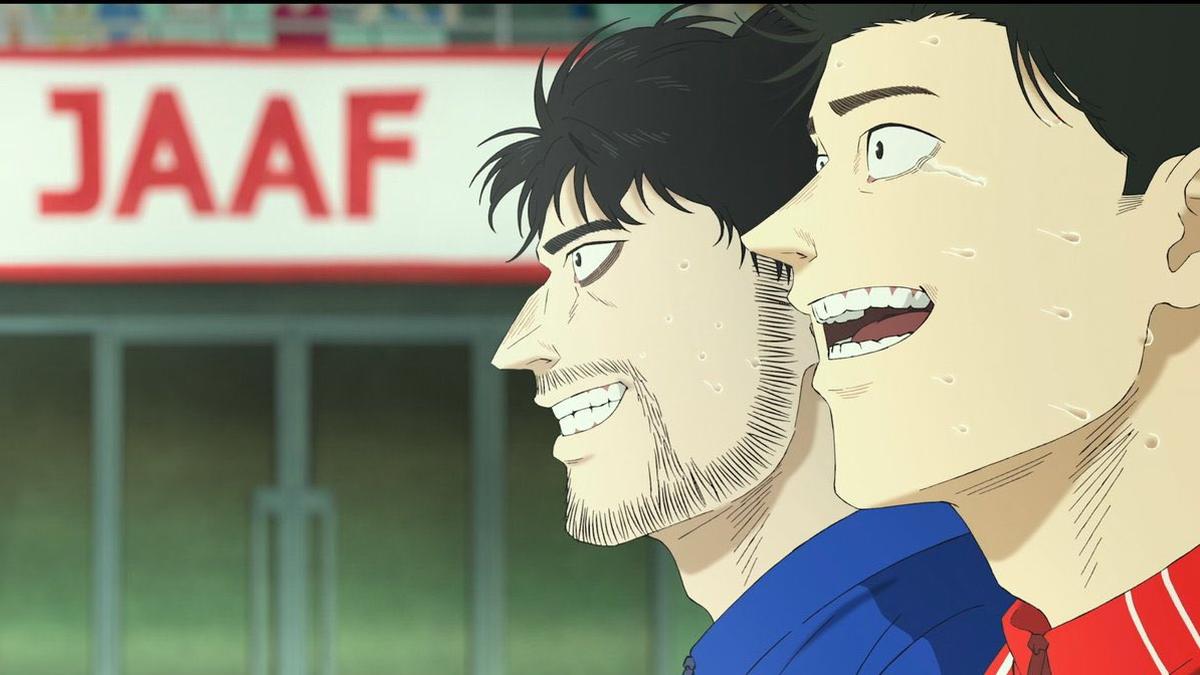
I loved running as a kid in a way that felt almost stupidly pure, the kind of love that didn’t need explanation or context, just a stretch of asphalt and the brief, intoxicating certainty that for a few seconds I was faster than everyone else in my gradem. My legs felt lighter than thought and my chest buzzed with that feral mix of pride and disbelief that comes from discovering your body can briefly outrun the world. What Netflix’s year-ending anime, 100 Meters (from the same brilliant mind that gave us Orb: On the Movements of the Earth) gets exactly right, is how quickly that fleeting thrill curdled into expectation, comparison, pressure, and eventually something heavier and lonelier. Adult life came along with a bluntness no finish line ever prepared me for. These days, the handful of times I get to run (other than away from my problems) only gets my breath ragged and my pace uneven, chasing that old childhood euphoria while fully aware it won’t last. That’s precisely why finding out that the fastest kid in the class simply learns how to suffer longer felt uncomfortably close to home.
Director Kenji Iwaisawa’s sophomore feature adapts Uoto’s early one-shot manga that follows two prodigious sprinters from elementary school into professional adulthood, tracking how a childhood rivalry built on speed, ego, and fleeting joy slowly hardens into pressure, injury, and the psychic toll of treating ten seconds of running as a life-defining measure. Iwaisawa works with Studio Rock ‘n’ Roll Mountain to treat that premise with total seriousness and a wicked sense of humor, staging sprinting as a technology that sorts bodies, distributes value, and subtly teaches men how to disappear inside effort.
100 Meters (Japanese)
Director: Kenji Iwaisawa
Cast: Tori Matsuzaka, Shota Sometani, Kenjiro Tsuda, Koki Uchiyama, Jun Kasama, Rie Takahashi
Runtime: 106 minutes
Storyline: Togashi, a talented runner, is motivated by transfer student Komiya to train harder. Years later, they face off as rivals on the racetrack
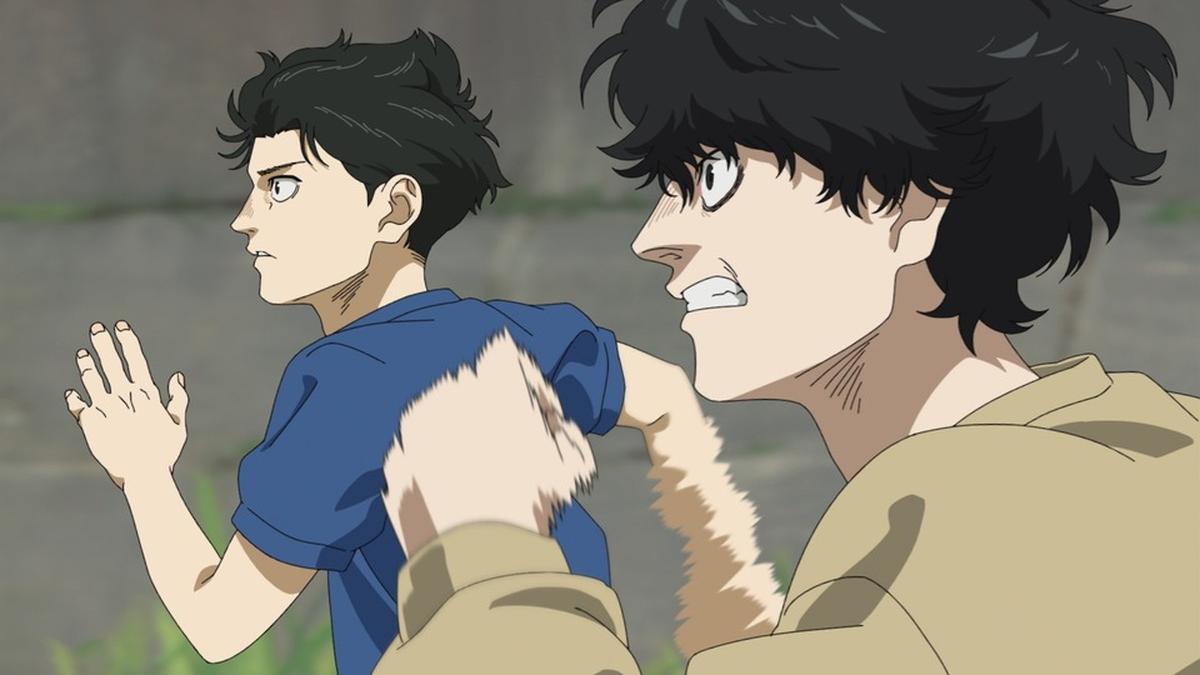
The opening establishes the terms with disarming clarity. Togashi, an elementary school prodigy with immaculate form, explains that running the 100 meters faster than anyone else can solve almost anything. He runs clean and wins automatically, already bored by his own competence. The new transfer student Komiya runs as if he’s being chased by something unnamed— posture collapsing forward, arms chopping air, shoes visibly cheap and half-destroyed. Togashi teaches him technique with casual generosity; Komiya receives it like scripture and turns it into a reason to exist. Years later, they meet again under new rules, new pressures, new stakes, and the same imbalance keeps reasserting itself in slightly altered form. The film catalogues this repetition.
A still from ‘100 Meters’
| Photo Credit:
Netflix
That early exchange becomes the film’s foundational scene, because what’s being passed along isn’t just form or efficiency, but a way of understanding the world, a simple rule offered with total confidence and absorbed without skepticism. The belief feels harmless, almost benevolent at first, until it starts organising choices, time, and self-worth around itself. The rest of the narrative watches that belief age, migrate, and calcify, long after its first, unsuspecting utterance. It’s hard not to think of Orb here, of how a single idea spoken plainly and confidently enough, can reorder an entire life, then a system, then an entire history.
The childhood section uses loose, elastic animation that moulds bodies as expressive matter. Feet barely touch the ground, and faces stretch into joy, panic and fixation while the running itself feels playful and vaguely feral. Then the film jumps forward and tightens. High school comes with rules and expectations, the animation pivots into rotoscoping and the shift hits like bones locking into place. Weight enters the frame, and gravity feels more prominent here. You see it in the way Togashi’s shoulders tense before starts and in the way Komiya’s stride remains stubbornly inefficient yet terrifyingly effective. This stylistic turn does ideological work. Adolescence becomes the moment when movement starts answering to institutions.

Iwaisawa understands that the 100-meter dash is almost anti-cinematic. Ten seconds resists the thrills of staging a conventional sports drama and his solution is structural variation. Each major race is staged differently, often radically. One race fractures into smeared abstraction with Komiya’s body losing coherence as obsession overtakes form. Another unfolds almost entirely through sound, as spikes scraping track, lungs tearing, and the roar of the crowd replace image. The rain sequence is the one that people will keep returning to because it distills the essence of the entire film. It is a gorgeously blocked, nearly four-minute oner which pulls the camera away from the runners, tracking the environment instead, as rain turns bodies into liquid chiaroscuro streaks. Hiroaki Tsutsumi’s flamboyant score rises underneath it with rapturous trumpets and driving percussion, lifting the sequence into something briefly ecstatic.

A still from ‘100 Meters’
| Photo Credit:
Netflix
What I appreciated more on reflection was how the supporting runners function as alternate futures rather than mere colour. The instantly recognisable rasp of Kenjiro Tsuda’s Kaidō dogmatises his resolve to keep running with the explicit belief that effort might eventually rewrite his position in the hierarchy. And the sybilline champion Zaitsu (Koki Uchiyama) quits once rivals appear, having achieved his own strange goal of no longer being alone at the top. These men talk endlessly about why they run, and the film exposes the absurdity of wrapping existential justification around physical exertion while honouring the desperation that produces that language in the first place.
In a decade where anime has turned increasingly optimised for swanky AMV’s and Instagram edits, 100 Metres feels stubbornly uninterested in being easily consumed. It belongs in the lineage of Redline and Akira for sheer kinetic confidence, filtered through the philosophical exhaustion of Ping Pong the Animation and the eroticised rivalry of Challengers.

The film also kept nudging me back toward Look Back, in how the two share a precise understanding of how rivalry works, how another person can turn a private passion into something obsessive and inescapable. Both see devotion beginning as companionship before hardening into pressure you can’t walk away from. It’s also hard not to notice how both Uoto and Tatsuki Fujimoto are having a remarkable run right now. Few mangaka at the moment are being translated with this much care, and fewer still are emerging from the process with their obsessions sharpened rather than diluted.

A still from ‘100 Meters’
| Photo Credit:
Netflix
I keep coming back to Uoto, because it’s hard to shake how close his career came to vanishing before it ever cohered. Hyakuemu nearly slipped into obscurity, stranded on a manga mobile app, and that brush with irrelevance feels etched into everything he’s done since. You can sense it in the way his stories distrust inevitability, in how they circle belief systems without granting them comfort, in how they let time grind people down instead of rewarding perseverance with the mercies of the narrative.

The turnaround has been staggering. In the span of a few years, he’s been responsible for Orb, easily one of the sharpest anime series in recent memory, and now 100 Metres, a film that stands comfortably among the year’s most serious animated works. What connects them isn’t theme or genre, but a philosophical temperament that eschews simplification. His writing watches people commit to ideas and then follows those commitments to their consequences. That willingness to let inquiry outrun reassurance has made his collected work some of the most bracing and intellectually stimulating screen storytelling I’ve encountered this year.
I only wish this film had come sooner, because it would’ve blown past the rest of my anime year-ender list and hit the line shoulder to shoulder with Orb, both breaking into that same final, gleaming smile once everything else dropped away.
100 Metres is currently streaming on Netflix
Published – January 03, 2026 12:53 pm IST

